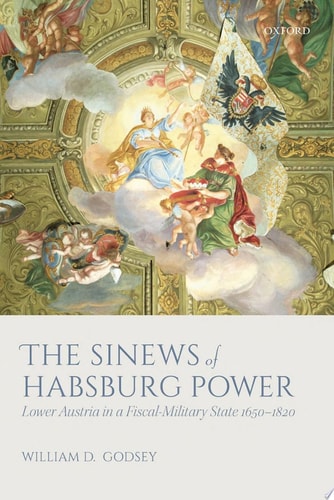
The Sinews of Habsburg Power
0
0
As an Amazon Associate and affiliate partner, Menrva Books earns from qualifying purchases. Learn more
Author Description
The Sinews Of Habsburg Power Explores The Domestic Foundations Of The Immense Growth Of Central European Habsburg Power From The Rise Of A Permanent Standing Army After The Thirty Years' War To The End Of The Napoleonic Wars. With A Force That Grew Irregularly In Size From Around 25,000 Soldiers To As Many As Half A Million In The War Of The Sixth Coalition, The Habsburg Monarchy Participated In Shifting International Constellations Of Rivalry From Western Europe To The Near East And In Some Two Dozen, Partly Overlapping Armed Conflicts. Raising Forces Of Such Magnitude Constituted A Central Task Of Habsburg Government, One That Ultimately Required The Cooperation Of Society And Its Elites. The Monarchy's Composite-territorial Structures In The Guise Of The Lower Austrian Estates — A Leading Representative Body And Privileged Corps — Formed A Vital, If Changing, Element Underlying Habsburg International Success And Resilience. With Its Capital At Vienna, The Archduchy Below The River Enns (the Historic Designation Of Lower Austria) Was Geographically, Politically, And Financially A Key Habsburg Possession. Fiscal-military Exigency Induced The Estates To Take Part In New And Evolving Arrangements Of Power That Served The Purposes Of Government; In Turn The Estates Were Able In Previously Little-understood Ways And Within Narrowing Boundaries To Preserve Vital Interests In A Changing World. The Estates Survived Because They Were Necessary, Not Only Thanks To Their Increasing Financial Potency, But Also Because They Offered A Politically Viable Way Of Exacting Ever-larger Quantities Of Money, Men, And Other Resources From Local Society. These Circumstances Would Persist As Ruling Became More Regularized, Formalized, And Homogenized, And As The Very Understanding Of The Estates As A Social And Political Phenomenon Was Evolving.
Menrva's Summary
THE THESIS
This work investigates how the Habsburg Monarchy successfully mobilized the necessary financial and human resources to sustain its military expansion between the end of the Thirty Years' War and the conclusion of the Napoleonic Wars. William D. Godsey, a historian specializing in the social and political structures of the Habsburg lands, examines the symbiotic relationship between the central government and the Lower Austrian Estates. He argues that the survival and resilience of the Monarchy were predicated on the Estates' ability to facilitate the extraction of resources from local society while simultaneously protecting their own institutional interests.
THE SCOPE MAP
What You Will Find
- Analysis of the growth of the Habsburg standing army from 25,000 to 500,000 soldiers.
- Examination of the fiscal-military relationship between the Viennese government and the Lower Austrian Estates.
- Historical study of the evolution of representative bodies within composite-territorial states.
- Discussion of the administrative and political mechanisms used to formalize and homogenize state power.
Scope Limits
- The study focuses primarily on the Archduchy below the River Enns rather than the entirety of the Habsburg domains.
- The analysis concludes with the end of the Napoleonic Wars and does not extend into the later 19th-century constitutional crises.
THE AUTHORITY PERSPECTIVE
Historians recognize this text as a rigorous examination of the administrative and fiscal underpinnings of the Habsburg state. Readers frequently note the academic density of the prose, which provides a detailed look at the intersection of local elite interests and imperial military requirements.
Page Count:
448
Publication Date:
2017-01-01
Publisher:
Oxford University Press
ISBN-10:
0192537202
ISBN-13:
9780192537201
History
Political History
European History
Austrian History
Military History
Community Tags
Similar Books