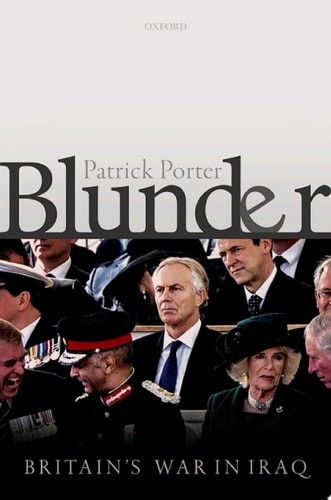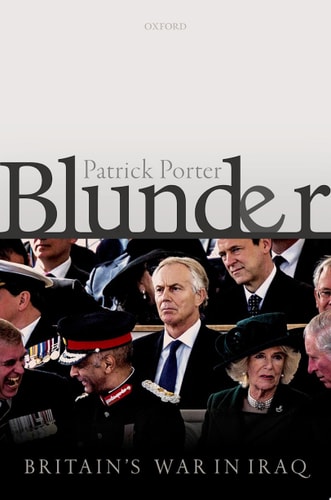
Blunder
0
0
As an Amazon Associate and affiliate partner, Menrva Books earns from qualifying purchases. Learn more
Author Description
Why Did Britain Go To War In Iraq In 2003? Existing Accounts Stress Dodgy Dossiers, Intelligence Failures, And The Flaws Of Individual Leaders. Deploying The Large Number Of Primary Documents Now Available, This Book Puts Ideas At The Centre Of The Story. As The Book Argues, Britain's War In Iraq Was Caused By Bad Ideas That Were Dogmatically Held And Widely Accepted. Three Ideas In Particular Formed The War's Intellectual Foundations: The Notion Of The Undeterrable, Fanatical Rogue State; The Vision That The West's Path To Security Is To Break And Remake States; And The Conceit That By Paying The 'blood Price', Britain Could Secure Influence In Washington Dc. These Issues Matter, Because Although The Iraq War Happened Fifteen Years Ago, It Is Still With Us. As Well As Its Severe Consequences For Regional And International Security, The Ideas That Powered The War Persist In Western Security Debate. If All Wars Are Fought Twice, First On The Battlefield And The Second Time In Memory, This Book Enters The Battle Over What Iraq Means Now, And What We Should Learn.
Menrva's Summary
THE THESIS
This book investigates the intellectual origins of Britain's decision to participate in the 2003 Iraq War, arguing that the conflict was driven by flawed, dogmatically held ideas rather than mere intelligence failures. Patrick Porter, a scholar of international security, utilizes a wealth of recently declassified primary documents to challenge conventional narratives. He posits that the war was sustained by three specific concepts: the belief in undeterrable rogue states, the conviction that Western security requires state-building through force, and the strategic assumption that paying a 'blood price' would guarantee British influence in Washington.
THE SCOPE MAP
What You Will Find
- Analysis of British foreign policy decision-making processes leading up to 2003
- Examination of the intellectual frameworks surrounding the 'rogue state' doctrine
- Evaluation of the Anglo-American 'special relationship' and its impact on military intervention
- Critique of the state-building paradigm in Western security strategy
Scope Limits
- Does not focus on the tactical execution of the war on the ground
- Does not provide a comprehensive biography of individual political leaders involved
THE AUTHORITY PERSPECTIVE
Experts recognize this work as a significant contribution to the historiography of the Iraq War, particularly for its focus on the ideological underpinnings of policy. Readers frequently note the academic density of the prose and the author's rigorous use of primary source documentation.
Page Count:
288
Publication Date:
2018-01-01
Publisher:
Oxford University Press
ISBN-10:
019253534X
ISBN-13:
9780192535344
History
International relations
Iraq War
Military History
British Politics
Community Tags
Similar Books