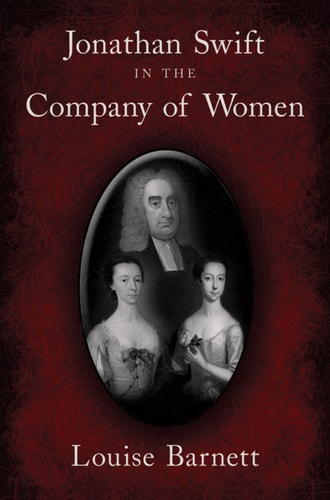
Jonathan Swift in the Company of Women
0
0
As an Amazon Associate and affiliate partner, Menrva Books earns from qualifying purchases. Learn more
Author Description
Jonathan Swift was the subject of gossip and criticism in his own time concerning his relations with women and his representations of them in his writings. For over twenty years he regarded Esther Johnson, "Stella," as "his most valuable friend," yet he is reputed never to have seen her alone. From his time to our own there has been speculation that the two were secretly married--since their relationship seemed so inexplicable then and now. For thirteen of the years that Swift seemed committed to Stella as the acknowledged woman in his life, he maintained a clandestine--but apparently also nonsexual--relationship with another woman, Esther Van Homrigh, or "Vanessa." Jonathan Swift in the Company of Women looks again at these much-examined relationships and at others that reveal Swift as a man who enjoyed the company of a number of women as pupils and as ministrants to his various needs. Swift, a man with a complex private life, was also a writer whose satiric portraits of women could be unsparing. While Swift often criticized women for frivolous pastimes and idle chatter, his most notorious texts on women image their bodies as loathsome: as he once wrote in a serious political tract, a woman is a "nauseous, unwholesome carcass." Such representations cross a line by showing a repugnance for women as a sex, the biological other. They have led, not surprisingly, to repeated charges of misogyny, an issue that Jonathan Swift in the Company of Women addresses at some length. This first book-length treatment of Swift and women comprehensively examines Swift's attitude toward women in all their manifestations in his work and life: as intimates, acquaintances, protégés, wives, mothers, nurses, disobedient daughters, young women who marry older men, and--finally--as poets and critics.
Menrva's Summary
THE THESIS
This work investigates the complex intersection between Jonathan Swift's private relationships with women and the often vitriolic representations of the female sex found within his literary corpus. Louise Barnett, a scholar of 18th-century literature, utilizes biographical records, personal correspondence, and textual analysis to examine whether Swift's documented interactions with figures like Esther Johnson and Esther Van Homrigh align with or contradict his public satires. The book argues that Swift's attitudes were multifaceted, requiring a nuanced reading that moves beyond simple labels of misogyny to understand his social and intellectual engagement with women of his era.
THE SCOPE MAP
What You Will Find
- Biographical analysis of Swift's primary female associates including Stella and Vanessa
- Examination of Swift's literary portrayals of women as mothers, nurses, and critics
- Analysis of the tension between Swift's personal friendships and his public satiric writings
- Historical context regarding 18th-century social norms and gender dynamics
Scope Limits
- The text does not provide a comprehensive biography of Swift's political career outside of his gender-related interactions
- It does not offer a definitive resolution to the long-standing historical debate regarding a secret marriage between Swift and Esther Johnson
THE AUTHORITY PERSPECTIVE
Scholars recognize this work as a foundational text for understanding the gendered dimensions of Swift's life and writing. Readers frequently note the academic rigor of the prose and the balanced approach the author takes toward controversial aspects of Swift's personal history.
Page Count:
225
Publication Date:
2006-01-01
Publisher:
Oxford University Press
ISBN-10:
0190293357
ISBN-13:
9780190293352
Biography
History
English & College Success
English
Gender Studies
Literary Criticism
18th century
Community Tags
Other Editions(2)
Similar Books