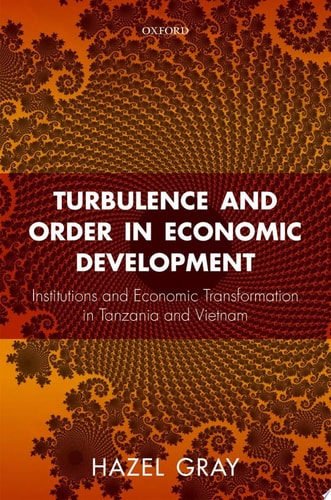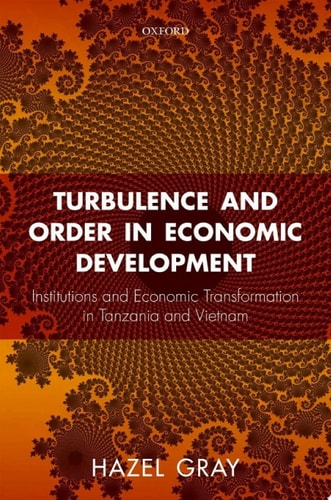
Turbulence and Order in Economic Development: Institutions and Economic Transformation in Tanzania and Vietnam
0
0
As an Amazon Associate and affiliate partner, Menrva Books earns from qualifying purchases. Learn more
Author Description
The terms of debate on the role of institutions in economic development are changing. Stable market institutions, in particular, secure private property rights and democratically accountable governments that uphold the rule of law, are widely seen to be a pre-requisite for economic transformation in low income countries, yet over the last thirty years, economic growth and structural transformation has surged forward in a range of countries where market and state institutions have differed these ideals, as well as from each other. Turbulence and Order in Economic Development studies the role of the state in two such countries, examining the interplay between market liberalization, institutions, and the distribution of power in Tanzania and Vietnam. Tanzania and Vietnam were two of the poorest countries in the world in the early 1980s but over the last thirty years, both have experienced significant changes in the pace and character of economic development. While both countries experienced faster rates of GDP growth, their paths of economic transformation were very different as Vietnam experienced rapid poverty reduction associated with the expansion of manufacturing while Tanzania's path of industrialization was characterized by the rise of mining and a much slower pace of poverty reduction. Employing a political settlements approach, this book considers the comparative role of the state in driving economic transformation. In both countries, the experiences of socialism continued to shape the role of the state in the economy even after extensive market liberalization, however, the distribution of political and economic power was very different. This had important consequences for the overlapping role of the state in generating political order and in driving economic transformation. Turbulence and Order in Economic Development studies the formal and informal ways that the state influenced economic transformation through its role in public financial management, land an
Menrva's Summary
THE THESIS
This book investigates how varying institutional arrangements and political power distributions influence economic transformation in developing nations that deviate from standard market-liberalization models. Hazel Gray, a scholar specializing in development economics, utilizes a political settlements framework to analyze why Tanzania and Vietnam—both formerly socialist states—achieved divergent industrial and poverty-reduction outcomes despite similar starting points in the 1980s. The work argues that the specific ways states manage political order and economic power are critical determinants of development success.
THE SCOPE MAP
What You Will Find
- Comparative analysis of economic growth trajectories in Tanzania and Vietnam from the 1980s to the present.
- Application of the political settlements approach to explain state-led economic transformation.
- Examination of public financial management and land policy as mechanisms of state influence.
Scope Limits
- The analysis does not provide a universal blueprint for development applicable to all low-income countries.
- The study focuses primarily on the state's role and does not extensively cover private-sector-led growth independent of government policy.
THE AUTHORITY PERSPECTIVE
Scholars in development studies identify this work as a rigorous application of political economy to comparative country analysis. Readers frequently note the academic density of the prose, which is intended for researchers and policymakers interested in the nuances of state-led industrialization.
Page Count:
263
Publication Date:
2018-01-01
Publisher:
OUP Oxford
ISBN-10:
0192548018
ISBN-13:
9780192548016
Economics
Economic History
Vietnam
Tanzania
Community Tags
Similar Books