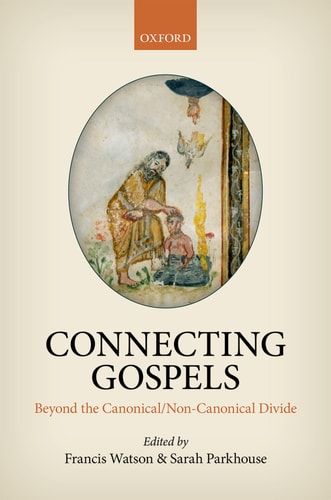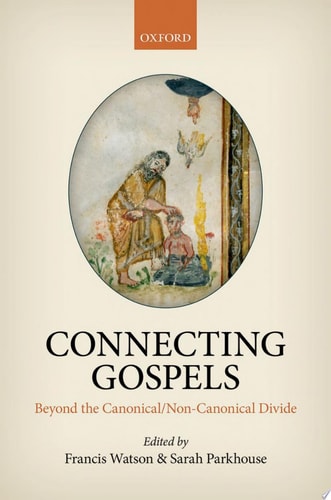
Connecting Gospels: Beyond the Canonical/Non-Canonical Divide
0
0
As an Amazon Associate and affiliate partner, Menrva Books earns from qualifying purchases. Learn more
Author Description
By The Late Second Century, Early Christian Gospels Had Been Divided Into Two Groups By A Canonical Boundary That Assigned Normative Status To Four Of Them While Consigning Their Competitors To The Margins. Connecting Gospels: Beyond The Canonical/non-canonical Divide Finds New Ways To Reconnect These Divided Texts. Starting From The Assumption That, In Spite Of Their Differences, All Early Gospels Express A Common Belief In The Absolute Significance Of Jesus And His Earthly Career, This Authoritative Collection Makes Their Interconnectedness Fruitful For Interpretation. The Contributors Have Each Selected A Theme Or Topic And Trace It Across Two Or More Gospels On Either Side Of The Canonical Boundary, And The Resulting Convergences And Divergences Shed Light Not Least On The Canonical Texts Themselves As They Are Read From New And Unfamiliar Vantage Points. This Volume Demonstrates That Early Gospel Literature Can Be Regarded As A Single Field Of Study, In Contrast To The Overwhelming Predominance Of The Canonical Four Characteristic Of Traditional Gospels Scholarship.
Menrva's Summary
THE THESIS
This volume investigates the artificiality of the canonical boundary in early Christian literature by proposing that all early gospels should be studied as a single, interconnected field. The editors, Francis Watson and Sarah Parkhouse, assemble a collection of scholarly essays that challenge the traditional separation between the four canonical gospels and non-canonical texts. By tracing shared themes across these divided works, the contributors argue that the absolute significance of Jesus serves as a unifying framework that renders the traditional binary distinction obsolete for modern academic inquiry.
THE SCOPE MAP
What You Will Find
- Comparative analysis of thematic threads across canonical and non-canonical gospels
- Methodological shifts in reading canonical texts through the lens of marginalized gospels
- Interdisciplinary approaches to early Christian literature as a unified corpus
Scope Limits
- Does not provide a comprehensive history of the canonization process itself
- Does not attempt to reconcile theological contradictions between the texts
THE AUTHORITY PERSPECTIVE
Scholars in the field of early Christianity recognize this collection as a significant intervention in traditional gospel studies. Readers frequently note the academic density of the prose, which is intended for researchers and students familiar with the complexities of New Testament criticism.
Page Count:
304
Publication Date:
2018-01-01
Publisher:
Oxford University Press
ISBN-10:
0192546392
ISBN-13:
9780192546395
History
Religion
Gospel Studies
Theology
Christianity