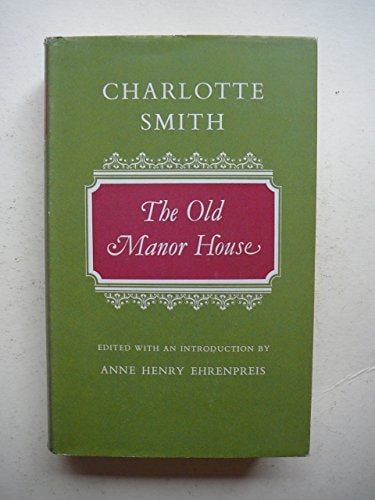
The Old Manor House
0
0
As an Amazon Associate and affiliate partner, Menrva Books earns from qualifying purchases. Learn more
Author Description
In The Old Manor House (1794), Charlotte Smith combines elements of the romance, the Gothic, recent history, and culture to produce both a social document and a compelling novel. A "property romance," the love story of Orlando and Monimia revolves around the Manor House as inheritable property. In situating their romance as dependent on the whims of property owners, Smith critiques a society in love with money at the expense of its most vulnerable members, the dispossessed. Appendices in this edition contemporary responses; writings on the genre debate by Anna Letitia Barbauld, John Moore, and Walter Scott; and historical documents focusing on property laws as well as the American and French revolutions.
Menrva's Summary
THE PULSE
The central conflict arises when the romantic aspirations of Orlando and Monimia are thwarted by the rigid constraints of inheritance laws and the capricious nature of property ownership. Orlando and Monimia navigate a social landscape where their future is dictated by the whims of wealthy relatives and the legal status of the Manor House. The narrative follows their efforts to secure a life together while facing the economic pressures of a society that prioritizes wealth over individual agency. Smith employs a third-person perspective to examine the intersection of personal desire and the harsh realities of eighteenth-century property rights. The protagonists must contend with external forces that threaten to dispossess them, highlighting the vulnerability of those without financial standing.
INSIDE THE PAGES
- Exploration of the property romance subgenre
- Integration of Gothic atmospheric elements
- Critique of eighteenth-century inheritance laws
- Commentary on the social impact of the American and French revolutions
- Focus on the vulnerability of the dispossessed
- Examination of class dynamics and economic dependency
- Use of the Manor House as a central symbolic and physical anchor
- Inclusion of historical context regarding contemporary social structures
THE COLLECTIVE ECHO
Readers and critics often identify this work as a significant social document that bridges the gap between traditional romance and political critique. Discussion frequently centers on how Smith utilizes the Gothic framework to expose the moral failings of a society obsessed with material wealth. The pacing is noted for its deliberate focus on the legal and economic obstacles facing the protagonists, which adds a layer of realism to the romantic plot. Scholars highlight the effectiveness of the Manor House as a symbol for the instability of inheritance and the precarious nature of social status during the late eighteenth century.
Page Count:
544
Publication Date:
1969-01-01
Publisher:
Oxford U.P
ISBN-10:
0192553178
ISBN-13:
9780192553171
Romance
Social Commentary
Historical
classic
Gothic
Community Tags
Other Editions(4)


Similar Books