Emperors and Usurpers in the Later Roman Empire
0
0
As an Amazon Associate and affiliate partner, Menrva Books earns from qualifying purchases. Learn more
Author Description
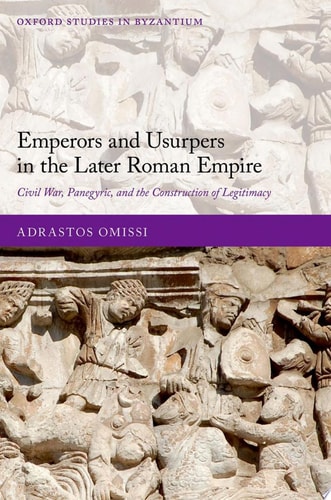
One Of The Great Maxims Of History Is That It Is Written By The Victors, And Nowhere Does This Find Greater Support Than In The Later Roman Empire. Between 284 And 395 Ad, No Fewer Than 37 Men Claimed Imperial Power, Though Today We Recognize Barely Half Of These Men As 'legitimate' Rulers And More Than Two Thirds Died At Their Subjects' Hands. Once Established In Power, A New Ruler Needed To Publicly Legitimate Himself And To Discredit His Predecessor: Overt Criticism Of The New Regime Became High Treason, With Historians Supressing Their Accounts For Fear Of Reprisals And The Very Names Of Defeated Emperors Chiselled From Public Inscriptions And Deleted From Official Records. In A Period Of Such Chaos, How Can We Ever Hope To Record In Any Fair Or Objective Way The History Of The Roman State? Emperors And Usurpers In The Later Roman Empire Is The First History Of Civil War In The Later Roman Empire To Be Written In English And Aims To Address This Question By Focusing On The Various Ways In Which Successive Imperial Dynasties Attempted To Legitimate Themselves And To Counter The Threat Of Almost Perpetual Internal Challenge To Their Rule. Panegyric In Particular Emerges As A Crucial Tool For Understanding The Rapidly Changing Political World Of The Third And Fourth Centuries, Providing Direct Evidence Of How, In The Wake Of Civil Wars, Emperors Attempted To Publish Their Legitimacy And To Delegitimize Their Enemies. The Ceremony And Oratory Surrounding Imperial Courts Too Was Of Great Significance: Used Aggressively To Dramatize And Constantly Recall The Events Of Recent Civil Wars, The Narratives Produced By The Court In This Context Also Went On To Have Enormous Influence On The Messages And Narratives Found Within Contemporary Historical Texts. In Its Exploration Of The Ways In Which Successive Imperial Courts Sought To Communicate With Their Subjects, This Volume Offers A Thoroughly Original Reworking Of Late Roman Domestic Politics, And Demonstrates Not Only
Menrva's Summary
THE THESIS
How did imperial dynasties in the later Roman Empire construct and maintain political legitimacy amidst constant civil war and internal threats? Adrastos Omissi, a scholar of Roman history, examines the period between 284 and 395 AD to analyze how rulers utilized rhetoric, panegyric, and court ceremony to solidify their authority. By investigating the mechanisms of propaganda and the suppression of dissenting historical accounts, the author provides a framework for understanding how the Roman state managed the volatile transition of power between competing claimants.
THE SCOPE MAP
What You Will Find
- Analysis of imperial panegyrics as primary political tools
- Examination of the relationship between court oratory and historical record-keeping
- Investigation into the delegitimization tactics used against defeated rivals
- Study of the period spanning 284 to 395 AD
Scope Limits
- The text focuses primarily on the political and rhetorical strategies of the elite rather than the experiences of the common citizenry
- The analysis is restricted to the specific timeframe of the late third and fourth centuries
THE AUTHORITY PERSPECTIVE
Scholars and historians identify this work as a significant contribution to the study of late Roman political communication and the construction of imperial identity. Readers frequently note the academic rigor of the prose and the author's ability to synthesize complex rhetorical evidence into a coherent political history.
Page Count:
400
Publication Date:
2018-01-01
Publisher:
Oxford University Press
ISBN-10:
0192558269
ISBN-13:
9780192558268
History
Ancient - Rome
Political History
Military History
Community Tags
Similar Books