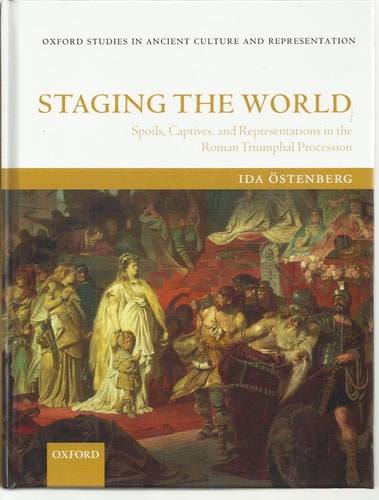
Staging the World: Spoils, Captives, and Representations in the Roman Triumphal Procession
0
0
As an Amazon Associate and affiliate partner, Menrva Books earns from qualifying purchases. Learn more
Author Description
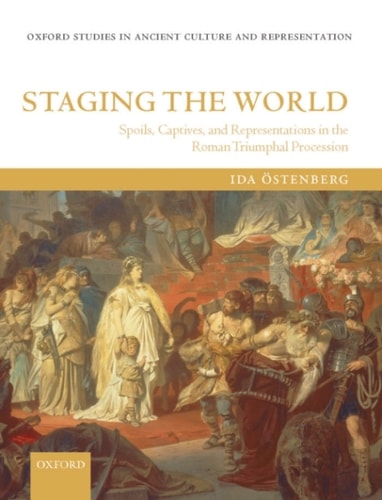
Staging the World is an illustrated study of the Roman triumphal procession in its capacity as spectacle and performance. Ida Ostenberg analyses how Rome presented and perceived the defeated on parade. Spoils, captives, and representations are the objects, and the basic questions to be asked concern both contents and context: What was displayed? How was it paraded? What was the response? The triumph was a crowded civic celebration, when spectators met with coins from Spain and Asia, Jewish temple treasures, silver plate and furniture from opulent royal feasts, trees from eastern gardens, Punic elephants appearing as in battle, kings, long known by name only, and ferocious barbarians dressed in outlandish costumes. Ostenberg aims to show what stories the Roman triumph told about the defeated and what ideas it transmitted about Rome itself.
Menrva's Summary
THE THESIS
This study investigates the Roman triumphal procession as a complex mechanism of spectacle and political performance designed to communicate Roman dominance over the defeated. Ida Ostenberg, a scholar of classical antiquity, utilizes a multidisciplinary framework to examine how the display of spoils, captives, and symbolic representations functioned within the civic life of Rome. By analyzing the intersection of material culture and public ritual, the author argues that these processions were not merely celebratory, but served as a deliberate medium for constructing and reinforcing Roman identity and imperial ideology.
THE SCOPE MAP
What You Will Find
- Analysis of the visual and material components of the Roman triumph
- Examination of the psychological and social impact on the Roman spectator
- Study of the symbolic representation of foreign cultures and defeated leaders
- Historical context regarding the logistics and staging of triumphal parades
Scope Limits
- Does not provide a comprehensive military history of the Roman Republic or Empire
- Focuses primarily on the performative and representational aspects rather than the tactical military outcomes of the wars themselves
THE AUTHORITY PERSPECTIVE
Experts in classical studies recognize this work as a significant contribution to the understanding of Roman public ritual and visual culture. Scholars frequently note the clarity of the author's analysis in connecting material displays to the broader political narratives of the Roman state.
Page Count:
344
Publication Date:
2009-01-01
Publisher:
OUP Oxford
ISBN-10:
0191568783
ISBN-13:
9780191568787
History
Cultural History
Ancient - Rome
Performance Studies
Sociology
Military History