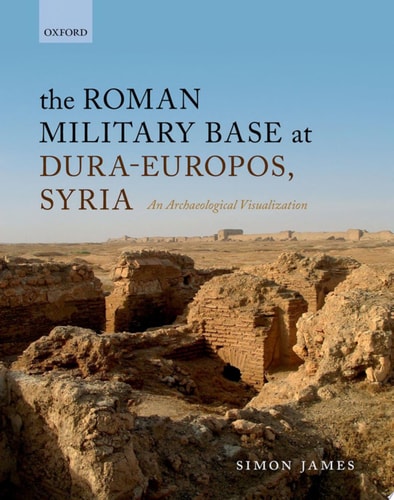
The Roman Military Base at Dura-Europos, Syria
0
0
As an Amazon Associate and affiliate partner, Menrva Books earns from qualifying purchases. Learn more
Author Description
Dura-europos, A Parthian-ruled Greco-syrian City, Was Captured By Rome C.ad165. It Then Accommodated A Roman Garrison Until Its Destruction By Sasanian Siege C.ad256. Excavations Of The Site Between The World Wars Made Sensational Discoveries, And With Renewed Exploration From 1986 To 2011, Dura Remains The Best-explored City Of The Roman East. A Critical Revelation Was A Sprawling Roman Military Base Occupying A Quarter Of The City's Interior. This Included Swathes Of Civilian Housing Converted To Soldiers' Accommodation And Several Existing Sanctuaries, As Well As Baths, An Amphitheatre, Headquarters, And More Temples Added By The Garrison. Base And Garrison Were Clearly Fundamental Factors In The History Of Roman Dura, But What Impact Did They Have On The Civil Population? Original Excavators Gloomily Portrayed Durenes Evicted From Their Homes And Holy Places, And Subjected To Extortion And Impoverishment By Brutal Soldiers, While Recent Commentators Have Envisaged Military-civilian Concordia, With Shared Prosperity And Integration. Detailed Examination Of The Evidence Presents A New Picture. Through The Use Of Gps, Satellite, Geophysical And Archival Evidence, This Volume Shows That The Roman Military Base And Resident Community Were Even Bigger Than Previously Understood, With Both Military And Civil Communities Appearing Much More Internally Complex Than Has Been Allowed Until Now. The Result Is A Fascinating Social Dynamic Which We Can Partly Reconstruct, Giving Us A Nuanced Picture Of Life In A City Near The Eastern Frontier Of The Roman World.
Menrva's Summary
THE THESIS
This volume investigates the complex social and structural relationship between the Roman military garrison and the civilian population of the frontier city of Dura-Europos. Simon J. James, an expert in Roman military archaeology, utilizes a synthesis of archival data, modern geophysical surveys, and satellite imagery to challenge previous binary interpretations of the occupation. The author argues that the military presence was more expansive and the social dynamics between soldiers and civilians were more nuanced than either the 'brutal occupation' or 'peaceful integration' models suggest.
THE SCOPE MAP
What You Will Find
- Analysis of the Roman military base footprint within the city of Dura-Europos.
- Examination of converted civilian housing and repurposed religious sanctuaries.
- Integration of modern GPS, satellite, and geophysical survey data with historical excavation records.
Scope Limits
- The study focuses primarily on the period between the Roman capture in 165 AD and the Sasanian destruction in 256 AD.
- It does not provide a comprehensive history of the city outside of the military-civilian interaction framework.
THE AUTHORITY PERSPECTIVE
Scholars recognize this work as a definitive re-evaluation of the archaeological record at Dura-Europos, particularly regarding the scale of the Roman military footprint. Readers frequently note the technical rigor of the analysis, which serves as a foundational text for those studying the social history of the Roman frontier.
Page Count:
672
Publication Date:
2019-01-01
Publisher:
Oxford University Press
ISBN-10:
0191061212
ISBN-13:
9780191061219
History
Military History
Ancient - Rome
Middle Eastern
Archaeology
Community Tags
Similar Books