Author Description
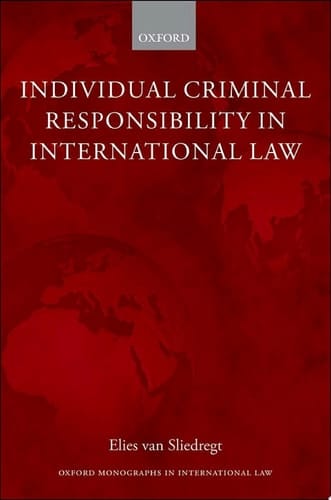
This is the first monograph to scrutinize the relationship between the concept of international legal personality as a theoretical construct and the position of the ultimate subject, the individual, as a matter of positive international law. By testing the four main theoretical conceptions of international legal personality against historical and existing norms of positive international law that regulate the conduct of individuals, the book argues that the common narrative in contemporary scholarship about the development of the role of the individual in the international legal system is flawed. Contrary to conventional wisdom, international law did not apply to states alone until World War II, only to transform during the second half of the 20th century so as to include individuals as its subjects. Rather, the answer to the question of individual rights and obligations under international law is - and always was - strictly empirical. It follows, of course, that the entities governed by a particular norm tell us nothing about the legal system to which that norm belongs. Instead, the distinction between international law and national law turns exclusively on whether the source of the norm in question is international or national in kind. Against the background of these insights, the book shows how present-day international lawyers continue to allow an idea, which was never more than a scholarly invention of the 19th century, to influence the interpretation and application of international law. This state of affairs has significant real-world ramifications as international legal rights and obligations of individuals (and other non-state entities) are frequently applied more restrictively than interpretation without presumptions regarding 'personality' would merit.
Menrva's Summary
THE THESIS
This book investigates whether the concept of international legal personality serves as a valid theoretical construct for understanding the status of individuals within positive international law. Astrid Kjeldgaard-Pedersen, a scholar of international law, challenges the prevailing academic narrative that the individual's role in the international legal system is a post-World War II development. By analyzing historical and contemporary norms, the author argues that the status of the individual has always been a matter of empirical fact rather than a theoretical evolution of the legal system itself.
THE SCOPE MAP
What You Will Find
- A critical examination of four primary theoretical conceptions of international legal personality.
- A historical analysis of norms regulating individual conduct from the 19th century to the present.
- A proposed methodology for distinguishing between international and national law based on norm sources.
Scope Limits
- The text does not provide a comprehensive history of human rights law, focusing instead on the theoretical construct of personality.
- It does not address the internal legal systems of specific sovereign states in detail.
THE AUTHORITY PERSPECTIVE
Legal scholars frequently cite this work for its rigorous deconstruction of long-standing assumptions within international legal theory. Experts highlight the text as a challenging read that demands a high level of familiarity with both historical jurisprudence and contemporary international law doctrines.
Page Count:
295
Publication Date:
2018-01-01
Publisher:
OUP Oxford
ISBN-10:
0192552341
ISBN-13:
9780192552341
Professional Career & Trade
Human rights
International Law
Legal Theory
Law
Community Tags
Similar Books