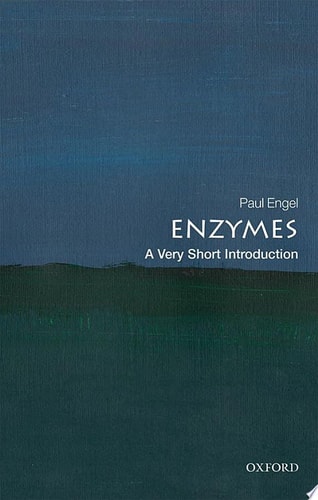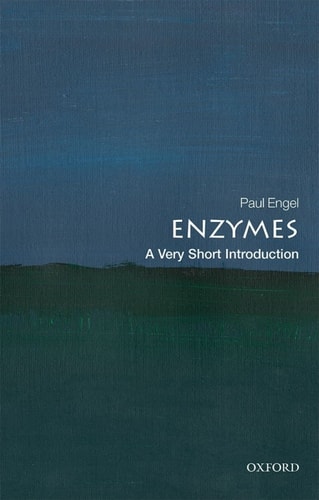
Enzymes: A Very Short Introduction
0
0
As an Amazon Associate and affiliate partner, Menrva Books earns from qualifying purchases. Learn more
Author Description
Enzymes are the astonishing, tiny molecular machines that make life possible. Each one of these small proteins speeds up a single chemical reaction inside a living organism many millionfold. Working together, teams of enzymes carry out all the processes that collectively we recognise as life, from making DNA to digesting food. This Very Short Introduction explains the why and the how of speeding up these reactions - catalysis - before going on to reveal how we have evolved these catalysts of such extraordinary power and exquisite selectivity. Paul Engel shows how X-ray crystallography has revealed the complex molecular shapes that allow enzymes to function at an extraordinarily sophisticated level. He also examines medical aspects of enzymes, both in the way faulty enzymes cause disease and in the way enzymes can be used for diagnosis and therapy. Finally, he looks at the many varied ways in which individual enzymes, taken out of their biological context, are used nowadays as tools - in washing powders, food production, waste treatment, and chemical synthesis. ABOUT THE SERIES: The Very Short Introductions series from Oxford University Press contains hundreds of titles in almost every subject area. These pocket-sized books are the perfect way to get ahead in a new subject quickly. Our expert authors combine facts, analysis, perspective, new ideas, and enthusiasm to make interesting and challenging topics highly readable.
Menrva's Summary
THE THESIS
This book investigates the fundamental biological mechanisms of enzymes and their role as catalysts in sustaining life. Paul C. Engel, an expert in biochemistry, utilizes structural biology and chemical kinetics to explain how these molecular machines facilitate essential reactions. The text provides a framework for understanding enzyme function, from their complex molecular architecture to their practical applications in medicine and industry.
THE SCOPE MAP
What You Will Find
- Principles of chemical catalysis and reaction kinetics
- Structural analysis via X-ray crystallography
- Medical implications of enzyme dysfunction and therapeutic potential
- Industrial applications including food production and waste management
Scope Limits
- Does not provide an exhaustive catalog of every known enzyme
- Does not serve as a comprehensive laboratory manual for experimental enzymology
THE AUTHORITY PERSPECTIVE
Experts and readers frequently note that this text provides a concise, accessible entry point into the complex field of biochemistry. It is widely regarded as a reliable overview for students and curious laypeople seeking to understand the mechanics of biological catalysts.
Page Count:
192
Publication Date:
2020-01-01
Publisher:
OUP Oxford
ISBN-10:
0192558811
ISBN-13:
9780192558817
Science
Enzymology
Biochemistry
Reference
Biology