The Assommoir
0
0
As an Amazon Associate and affiliate partner, Menrva Books earns from qualifying purchases. Learn more
Author Description
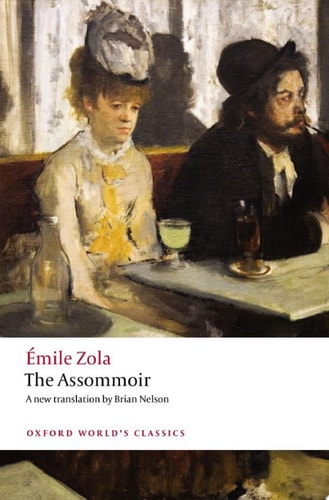
'in this life, even if you don't ask for much you still end up with bugger all!' In a run-down quarter of Paris, Gervaise Macquart struggles to earn a living and support her family. She earns a pittance washing other people's dirty clothes in the local washhouse, and dreams of having her own laundry. But in order to start her business she must incur debt, and her feckless husband cannot resist the lure of the Assommoir, the local bar that supplies all the working men with cheap spirits and absinthe. As her money troubles grow, so Gervaise's life begins to spiral out of control, and she is trapped in a vicious web of want and neglect. The Assommoir is a pivotal novel in Zola's Rougon-Macquart series. In it he lays bare the terrible poverty of the Parisian underclass, living in overcrowded tenements, addicted to drink, a world of squalor, and casual violence. It contains some of Zola's most powerful and graphic writing, unforgettable portrayals of individuals and their environment, and the fine line between self-respect and ruin.
Menrva's Summary
THE PULSE
Gervaise Macquart attempts to secure a stable life for her family in the slums of Paris, only to be systematically dismantled by systemic poverty and the pervasive influence of alcoholism. Gervaise works as a laundress, striving to maintain her dignity and independence through the operation of her own shop. Her efforts are constantly undermined by her husband's addiction and the crushing economic pressures of the Parisian underclass. The narrative employs a third-person perspective to document the slow, inevitable decline of the protagonist as she navigates a world defined by physical decay and social stagnation.
INSIDE THE PAGES
- Detailed depiction of the Parisian working-class environment
- Exploration of the hereditary and environmental factors influencing human behavior
- Use of naturalistic prose to describe squalor and physical labor
- Focus on the destructive cycle of alcohol addiction
- Examination of the economic instability inherent in 19th-century urban life
- Integration of colloquial language to reflect the social strata of the characters
- Analysis of the tension between individual ambition and societal constraints
- Chronological progression of the protagonist's descent into ruin
THE COLLECTIVE ECHO
Readers and critics frequently identify this work as a definitive example of the Naturalist movement, noting its unflinching commitment to portraying the harsh realities of the urban poor. Discussion often centers on Zola's meticulous attention to environmental detail and how the setting functions as an active force in the characters' downfall. Many observers highlight the author's ability to balance clinical observation with a visceral depiction of human suffering. The novel remains a subject of study for its stark portrayal of the social conditions in nineteenth-century France and its influence on the development of modern realism.
Page Count:
304
Publication Date:
2021-01-01
Publisher:
OUP Oxford
ISBN-10:
0192563637
ISBN-13:
9780192563637
Historical Fiction
English
English & College Success
Social Realism
French literature
Naturalism
Classic Literature
Community Tags
Similar Books