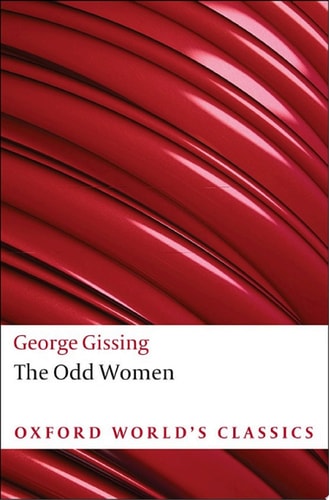
The Odd Women
0
0
As an Amazon Associate and affiliate partner, Menrva Books earns from qualifying purchases. Learn more
Author Description
there are half a million more women than men in this unhappy country of ours... So many odd women - no making a pair with them.' The idea of the superfluity of unmarried women was one the `New Woman' novels of the 1890s sought to challenge. But in The Odd Women (1893) Gissing satirizes the prevailing literary image of the `New Woman' and makes the point that unmarried women were generally viewed less as noble and romantic figures than as `odd' and marginal in relation to the ideal of womanhood itself. Set in grimy, fog-ridden London, these `odd' women range from the idealistic, financially self-sufficient Mary Barfoot and Rhoda Nunn, who run a school to train young women in office skills for work, to the Madden sisters struggling to subsist in low-paid jobs and experiencing little comfort or pleasure in their lives. Yet it is for the youngest Madden sister's marriage that the novel reserves its most sinister critique. With superb detachment Gissing captures contemporary society's ambivalence towards its own period of transition. The Odd Women is a novel engaged with all the major sexual and social issues of the late-nineteenth century. Judged by contemporary reviewers as equal to Zola and Ibsen, Gissing was seen to have produced an `intensely modern' work and it is perhaps for this reason that the issues it raises remain the subject of contemporary debate.
Menrva's Summary
THE PULSE
The central conflict arises from the societal marginalization of unmarried women in late-Victorian London, forcing them to navigate a world that views their independence as an anomaly. The narrative follows the lives of several women, including the pragmatic educators Mary Barfoot and Rhoda Nunn, who attempt to foster female autonomy through vocational training, and the struggling Madden sisters, who face the harsh realities of poverty and limited opportunity. Gissing employs a third-person omniscient perspective to examine the friction between individual aspiration and the rigid expectations of the era. The story unfolds within a bleak, industrial urban landscape that serves as a physical manifestation of the characters' restricted social mobility.
INSIDE THE PAGES
- Detailed depiction of late-nineteenth-century London social strata
- Exploration of the 'New Woman' archetype and its societal reception
- Contrast between idealistic professional independence and the desperation of poverty
- Critical examination of the institution of marriage
- Focus on vocational training as a means of female empowerment
- Satirical commentary on contemporary gender norms
- Realistic portrayal of economic hardship and labor conditions
- Multi-perspective narrative structure following diverse female experiences
THE COLLECTIVE ECHO
Readers and critics frequently highlight Gissing's detached, clinical observation of Victorian social structures as a defining feature of the work. Discussion often centers on the author's complex portrayal of the 'New Woman,' noting that he avoids simple idealization in favor of a nuanced critique of both traditional and progressive social movements. Many observers point to the stark contrast between the intellectual ambitions of the school founders and the grim, claustrophobic reality of the Madden sisters' lives as the novel's most effective narrative device. The text is consistently recognized for its ability to capture the anxieties of a society in transition, ensuring that its themes remain relevant to modern discourse on gender and economic independence.
Page Count:
418
Publication Date:
2000-01-01
Publisher:
OUP Oxford
ISBN-10:
0191605301
ISBN-13:
9780191605307
Historical Fiction
Classic Literature
Sisters fiction
Feminist
English
Friendship
Fiction psychological
Victorian
Single Women
English & College Success
Social Realism
London England
Community Tags
Other Editions(15)

E-Artnow
2022
Default edition
Mint Editions
2021

West Margin Press
2021
Independently Published
2020

Woolf Haus Publishing
2020

Independently Published
2020

Amazon Digital Services LLC - KDP Print US
2019

CreateSpace Independent Publishing Platform
2017

CreateSpace Independent Publishing Platform
2017
CreateSpace Independent Publishing Platform
2016
Creative Media Partners, LLC
2016
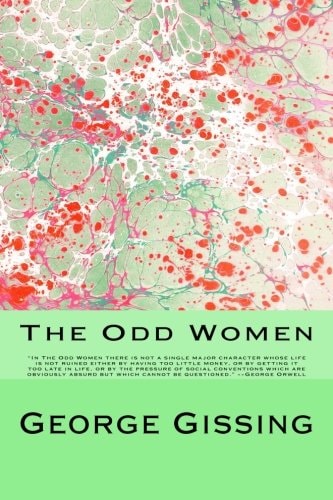
CreateSpace Independent Publishing Platform
2013
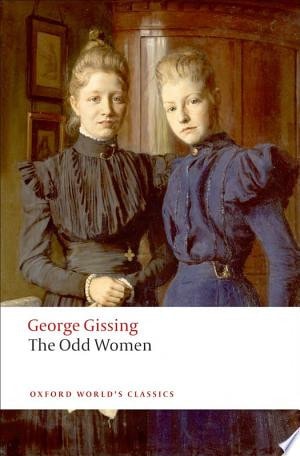
Oup Oxford
2000
OUP Oxford
2000
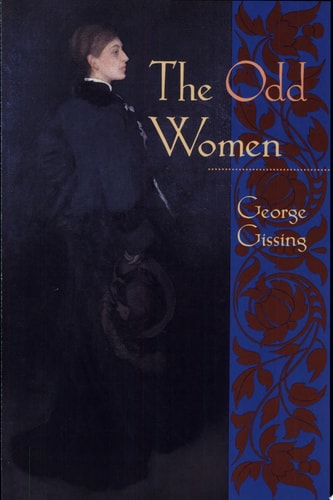
W. W. Norton & Company
1977
Similar Books












Reader Comments
Share Your Thoughts
No comments yet. Be the first to share your thoughts!