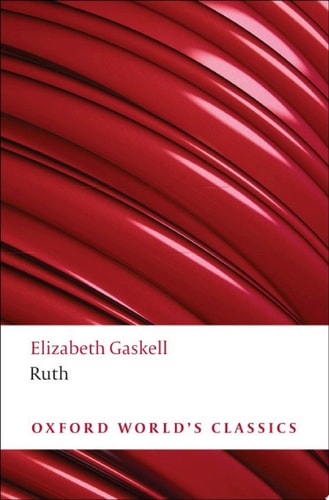
Ruth
0
0
As an Amazon Associate and affiliate partner, Menrva Books earns from qualifying purchases. Learn more
Author Description
'I think I must be an improper woman without knowing it, I do so manage to shock people.' Elizabeth Gaskell's second novel challenged contemporary social attitudes by taking as its heroine a fallen woman. Ruth Hilton is an orphan and an overworked seamstress, an innocent preyed upon by a weak, wealthy seducer. When he heartlessly abandons her she finds shelter and kindness in the home of a dissenting minister and his sister, who do not reject her when she gives birth to an illegitimate child. But Ruth's self-sacrificing love and devotion are tested to the limit by a twist of fate that brings her past back to haunt her. Gaskell's depiction of Ruth lays bare Victorian hypocrisy and sexual double-standards, and her novel is a remarkable story of love, of the sanctuary and tyranny of the family, and of the consequences of lies and deception.
Menrva's Summary
THE PULSE
After being abandoned by a wealthy suitor, a young seamstress must navigate the rigid moral landscape of Victorian society while raising an illegitimate child. Ruth Hilton, an orphaned seamstress, finds herself cast out of polite society after a brief, illicit affair leaves her pregnant and alone. She is eventually taken in by a dissenting minister and his sister, who offer her a chance at redemption through domestic service and quiet devotion. The narrative follows her struggle to maintain this new life while the threat of her past being exposed looms over her, testing her resolve and the integrity of those who protect her. The story is presented through a third-person omniscient perspective that highlights the internal moral conflicts of the characters against the external pressures of a judgmental community.
INSIDE THE PAGES
- Exploration of Victorian sexual double standards
- Critique of religious hypocrisy and social ostracization
- Focus on the theme of redemption and self-sacrifice
- Portrayal of the domestic sphere as both sanctuary and prison
- Examination of the consequences of deception
- Character-driven narrative focusing on moral growth
- Detailed depiction of 19th-century class dynamics
- Use of a sympathetic, moralizing narrative voice
THE COLLECTIVE ECHO
Discussion often centers on Gaskell's bold decision to center a novel on a 'fallen woman,' a topic that was highly controversial during the Victorian era. Readers frequently highlight the author's ability to balance social commentary with the intimate, often painful experiences of the protagonist. Critics often point to the novel's examination of the conflict between individual morality and the rigid expectations of the public. The pacing is noted for its steady, deliberate progression, which allows for deep character development and a thorough exploration of the themes of forgiveness and social justice. Many readers find the depiction of the minister's household to be a significant study in the complexities of compassion and the limitations of charity in a judgmental society.
Page Count:
409
Publication Date:
2011-01-01
Publisher:
OUP Oxford
ISBN-10:
0191620424
ISBN-13:
9780191620423
Historical Fiction
Classic Literature
English
Victorian
English & College Success
Social Realism
Domestic fiction
England
Community Tags
Other Editions(4)
Similar Books