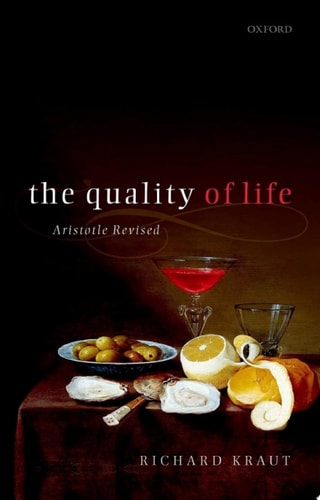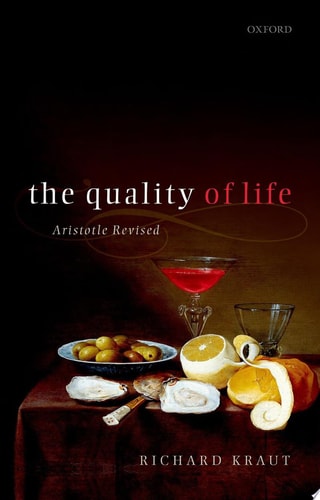
The Quality of Life: Aristotle Revised
0
0
As an Amazon Associate and affiliate partner, Menrva Books earns from qualifying purchases. Learn more
Author Description
The Quality Of Life: Aristotle Revised Presents A Philosophical Theory About The Constituents Of Human Well-being. The Principal Idea Is That What Aristotle Calls 'external Goods' - Wealth, Reputation, Power - Have At Most An Indirect Bearing On The Quality Of Our Lives. Starting With Aristotle's Thoughts About This Topic, Kraut Increasingly Modifies (and Occasionally Rejects) That Stance. He Argues That The Way In Which We Experience The World Is What Well-being Consists In. A Good Internal Life Comprises, In Part, Pleasure But Far More Valuable Is The Quality Of Our Emotional, Intellectual, Social, And Perceptual Experiences. These Offer The Potential For A Richer And Deeper Quality Of Life Than That Which Is Available To Many Other Animals. A Good Human Life Is Immeasurably Better Than That Of A Simple Creature That Feels Only The Pleasures Of Nourishment; Even If It Felt Pleasure For Millions Of Years, Human Life Would Be Superior. In Opposition To Contemporary Discussions Of Well-being, Which Often Appeal To A Thought Experiment Devised By Robert Nozick, Kraut Concludes That The Quality Of Our Lives Consists Entirely In The Quality Of Our Experiences. While Others Hold That We Must Live In 'the Real World' To Live Well And That One's Interior Life Has Little Or No Value On Its Own, Kraut's Interpretation Of This Thought Experiment Supports The Opposite Conclusion.
Menrva's Summary
THE THESIS
This book investigates the core question of what constitutes human well-being and whether external goods or internal experiences hold greater value in a good life. Richard Kraut, a prominent philosopher, builds upon and critiques Aristotelian frameworks to propose a theory centered on the quality of internal experience. He utilizes philosophical analysis and thought experiments to argue that the richness of our emotional, intellectual, and social experiences defines the quality of our existence, rather than external factors like wealth or power.
THE SCOPE MAP
What You Will Find
- A critical re-evaluation of Aristotelian ethics regarding external goods.
- A philosophical argument prioritizing internal experience over objective reality.
- Analysis of Robert Nozick's 'experience machine' thought experiment.
Scope Limits
- The text does not provide empirical psychological data or sociological studies.
- It does not offer practical self-help advice or prescriptive lifestyle guides.
THE AUTHORITY PERSPECTIVE
Experts recognize this work as a significant contribution to contemporary ethical theory and the philosophy of well-being. Readers frequently note the academic density of the prose, which requires a strong background in philosophical discourse to fully grasp the nuances of Kraut's arguments.
Page Count:
320
Publication Date:
2018-01-01
Publisher:
Oxford University Press
ISBN-10:
0192563955
ISBN-13:
9780192563958
Philosophy
Metaphysics
Ethics
well being