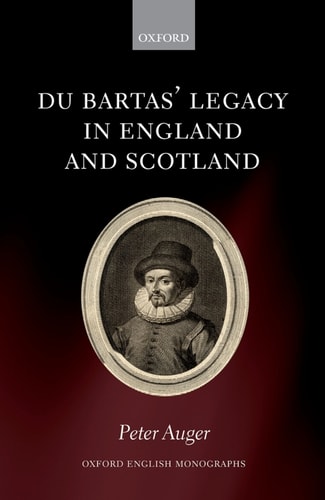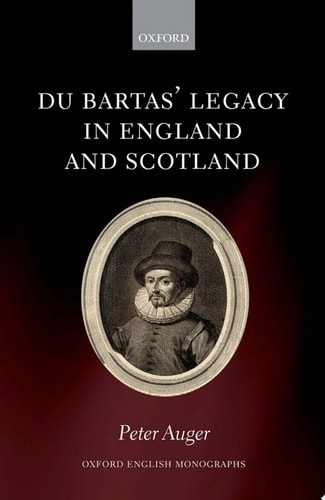
Du Bartas' Legacy in England and Scotland
0
0
As an Amazon Associate and affiliate partner, Menrva Books earns from qualifying purchases. Learn more
Author Description
Guillaume De Saluste Du Bartas Was The Most Popular And Widely-imitated Poet In Sixteenth- And Seventeenth-century England And Scotland. C. S. Lewis Felt That A Reconsideration Of His Works' British Reception Was 'long Overdue' Back In The 1950s, And This Study Finally Provides The First Comprehensive Account Of How English-speaking Authors Read, Translated, Imitated, And Eventually Discarded Du Bartas' Model For Protestant Poetry. The First Part Shows That Du Bartas' Friendship With James Vi And I Was Key To His Later Popularity. Du Bartas' Poetry Symbolized A Transnational Protestant Literary Culture In Huguenot France And Britain. Through James Intervention, Scottish Literary Tastes Had A Significant Impact In England. Later Chapters Assess How Sidney, Spenser, Milton, And Many Other Poets Justified Writing Poetic Fictions In Reaction To Du Bartas' Austere Emphasis On Scriptural Truth. These Chapters Give Equal Attention To How Du Bartas' Example Offered A Route Into Original Verse Composition For Male And Female Poets Across The Literate Population. Du Bartas' Legacy In England And Scotland Responds To Recent Developments In Transnational And Translation Studies, The History Of Reading, Women's Writing, Religious Literature, And Manuscript Studies. It Argues That Du Bartas' Legacy Deserves Far Greater Prominence Than It Has Previously Received Because It Offers A Richer, More Democratic, And More Accurate View Of Sixteenth- And Seventeenth-century English, Scottish, And French Literature And Religious Culture.
Menrva's Summary
THE THESIS
This study investigates the profound influence of French poet Guillaume de Saluste Du Bartas on the literary landscape of sixteenth- and seventeenth-century England and Scotland. Peter Auger, a scholar specializing in early modern literature, utilizes a combination of historical reception analysis and comparative literary study to argue that Du Bartas served as a central figure in shaping Protestant poetic identity. The work posits that Du Bartas' model provided a critical framework for British authors to navigate the tension between scriptural truth and poetic fiction, ultimately arguing for his re-evaluation in the canon of early modern literature.
THE SCOPE MAP
What You Will Find
- Analysis of the transnational Protestant literary culture between Huguenot France and Britain.
- Examination of the influence of James VI and I on the reception of Du Bartas' work.
- Case studies on how major poets like Sidney, Spenser, and Milton engaged with Du Bartas' aesthetic.
- Discussion of the role of Du Bartas' poetry in the development of original verse for both male and female writers.
Scope Limits
- The study focuses primarily on the reception in England and Scotland, rather than a global analysis of Du Bartas' influence.
- It does not provide a comprehensive biography of Du Bartas, focusing instead on his literary legacy and reception history.
THE AUTHORITY PERSPECTIVE
Scholars in the field of early modern studies recognize this work as a significant contribution to the history of reading and transnational literary exchange. Readers frequently note the academic rigor of the prose and the depth of the archival research presented throughout the text.
Page Count:
272
Publication Date:
2019-01-01
Publisher:
Oxford University Press
ISBN-10:
0192562827
ISBN-13:
9780192562821
History
Poetry
Literary Criticism
Translation Studies