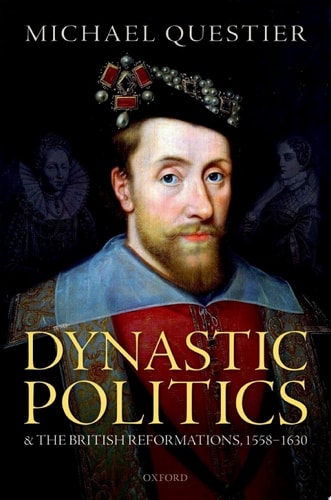
Dynastic Politics and the British Reformations, 1558-1630
0
0
As an Amazon Associate and affiliate partner, Menrva Books earns from qualifying purchases. Learn more
Author Description
Dynastic Politics and the British Reformations, 1558-1630 revisits what used to be regarded as an entirely 'mainstream' topic in the historiography of the later sixteenth and early seventeenth centuries - namely, the link between royal dynastic politics and the outcome of the process usually referred to as 'the Reformation'. As everyone knows, the principal mode of transacting so much of what constituted public political activity in the early modern period, and especially of securing something like political obedience if not exactly stability, was through the often distinctly un-modern management of the crown's dynastic rights, via the line of royal succession and in particular through matching into other royal and princely families. Dynastically, the states of Europe resembled a vast sexual chess board on which the trick was to preserve, advance, and then match (to advantage) one's own most powerful pieces. This process and practice were, obviously, not unique to the sixteenth and seventeenth centuries. But the changes in religion generated by the discontents of western Christendom in the Reformation period made dynastic politics ideologically fraught in a way which had not been the case previously, in that certain modes of religious thought were now taken to reflect on, critique, and hinder this mode of exercising monarchical authority, sometimes even to the extent of defining who had the right to be king or queen.
Menrva's Summary
THE THESIS
This work investigates how the intersection of royal dynastic management and religious ideological shifts fundamentally altered the nature of monarchical authority in Britain between 1558 and 1630. Michael Questier, a historian specializing in early modern British religious and political history, utilizes archival records and contemporary political correspondence to argue that the Reformation transformed dynastic marriage and succession from routine administrative tasks into ideologically volatile instruments of statecraft. By examining the crown's attempts to secure stability through matrimonial alliances, the author demonstrates how religious dissent began to challenge the very legitimacy of royal succession and the exercise of sovereign power.
THE SCOPE MAP
What You Will Find
- Analysis of the relationship between royal marriage strategies and religious policy.
- Examination of the political impact of the Reformation on the British monarchy.
- Investigation into how religious thought influenced the criteria for royal succession.
Scope Limits
- The study is strictly confined to the period between 1558 and 1630.
- The analysis focuses primarily on the British context rather than a comprehensive survey of all European states.
THE AUTHORITY PERSPECTIVE
Scholars recognize this text as a significant contribution to the historiography of early modern political culture, noting its rigorous examination of the tension between dynastic necessity and religious change. Readers frequently highlight the academic density of the prose, which is intended for an audience familiar with the complexities of the British Reformation period.
Page Count:
517
Publication Date:
2018-01-01
Publisher:
OUP Oxford
ISBN-10:
0192560840
ISBN-13:
9780192560841
History
History of the Americas
Reformation
Political History
British History
History - Modern
Religious History
Community Tags
Similar Books