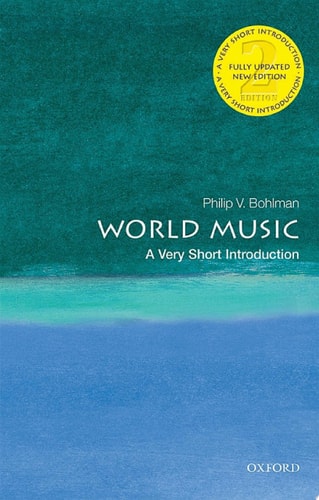
World Music: A Very Short Introduction
0
0
As an Amazon Associate and affiliate partner, Menrva Books earns from qualifying purchases. Learn more
Author Description
The term 'world music' encompasses both folk and popular music across the globe, as well as the sounds of cultural encounter and diversity, sacred voices raised in worship, local sounds, and universal values. It emerged as an invention of the West from encounters with other cultures, and holds the power to evoke the exotic and give voice to the voiceless. Today, in both sound and material it has a greater presence in human societies than ever before. The politics of which world music are a part - globalization, cosmopolitanism, and nationalism - play an increasingly direct role in societies throughout the world, but are at the same time also becoming increasingly controversial. In this new edition of his Very Short Introduction, Philip Bohlman considers questions of meaning and technology in world music, and responds to the dramatically changing political world in which people produce and listen to world music. He also addresses the different ways in which world music is created, disseminated, and consumed, as the full reach of the internet and technologies that store and spread music through the exchange of data files spark a revolution in the production and availability of world music. Finally, Bohlman revises the way we think of the musician, as an increasingly mobile individual, sometimes because physical borders have fallen away, at other times because they are closing. ABOUT THE SERIES: The Very Short Introductions series from Oxford University Press contains hundreds of titles in almost every subject area. These pocket-sized books are the perfect way to get ahead in a new subject quickly. Our expert authors combine facts, analysis, perspective, new ideas, and enthusiasm to make interesting and challenging topics highly readable.
Menrva's Summary
THE THESIS
This book investigates the complex definition, evolution, and sociopolitical implications of 'world music' in an increasingly interconnected global landscape. Philip V. Bohlman, a professor of music and Jewish studies, utilizes his extensive background in ethnomusicology to analyze how music functions as a bridge between cultures and a tool for political expression. He argues that world music is not merely a genre, but a dynamic reflection of globalization, nationalism, and technological advancement that shapes human identity.
THE SCOPE MAP
What You Will Find
- Analysis of the historical emergence of world music as a Western construct
- Examination of the impact of digital technology and the internet on music dissemination
- Discussion on the intersection of music with globalization, cosmopolitanism, and nationalism
- Perspectives on the changing role of the musician in a world of shifting physical and digital borders
Scope Limits
- Does not provide an exhaustive catalog of global musical styles or regional traditions
- Does not function as a technical manual for music theory or composition
THE AUTHORITY PERSPECTIVE
Experts and academics recognize this text as a concise, high-level overview suitable for students and interested laypeople seeking to understand the cultural politics of music. Readers frequently note the academic density of the prose, which balances theoretical inquiry with contemporary examples of how music is consumed in the digital age.
Page Count:
192
Publication Date:
2020-01-01
Publisher:
OUP Oxford
ISBN-10:
0192564455
ISBN-13:
9780192564450
Music
Sociology
Humanities
World Music
Globalization
Community Tags
Other Editions(4)
Similar Books






Reader Comments
Share Your Thoughts
No comments yet. Be the first to share your thoughts!