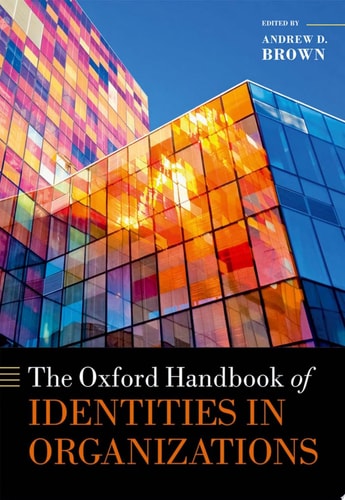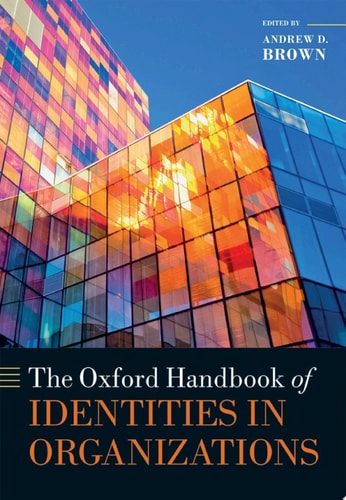
The Oxford Handbook of Identities in Organizations
0
0
As an Amazon Associate and affiliate partner, Menrva Books earns from qualifying purchases. Learn more
Author Description
Conceived as the meanings that individuals attach to their selves, a substantial stockpile of theory related to identities accumulated across the arts, social sciences, and humanities over many decades continues to nourish contemporary research on self-identities in organizations. In times which are more reflexive, narcissistic, and fluid, the identities of participants in organizations are increasingly less fixed and less certain, making identity issues both more salient and more interesting. Particular attention has been given to processes of identity construction, often styled 'identity work'. Research has focused on how, why, and when such processes occur, and their implications for organizing and individual, group, and organizational outcomes. This has resulted in a burgeoning stream of research from discursive, dramaturgical, symbolic, socio-cognitive, and psychodynamic perspectives that most often casts individuals' efforts to fabricate identities as intentional, relational, and consequential. Seemingly intractable debates centred on the nature of identities - their relative stability or fluidity, whether they are best regarded as coherent or fractured, positive (or not), and how they are fabricated within relations of power - combined with other conceptual issues continue to invigorate the field. However, these debates have also led to some scepticism regarding the future potential of identities research. Yet as the chapters in this Handbook demonstrate, there are considerable grounds for optimism that identity, as root metaphor, nexus concept, and means to bridge levels of analysis has significant potential to generate multiple compelling streams of theorizing in organization and management studies.
Menrva's Summary
THE THESIS
This volume investigates the multifaceted nature of identity construction within organizational settings and its implications for management theory. Edited by Andrew D. Brown, the handbook synthesizes decades of research from the arts, social sciences, and humanities to address how individuals navigate self-identity in increasingly fluid and reflexive work environments. It argues that identity serves as a critical nexus concept capable of bridging individual, group, and organizational levels of analysis.
THE SCOPE MAP
What You Will Find
- Theoretical frameworks including discursive, dramaturgical, symbolic, socio-cognitive, and psychodynamic perspectives.
- Analysis of 'identity work' processes and their impact on organizational outcomes.
- Examination of debates regarding identity stability, coherence, and the influence of power dynamics.
Scope Limits
- The text focuses primarily on organizational and management studies rather than clinical psychological identity disorders.
- It does not provide a singular, unified theory of identity but rather a collection of diverse, often competing, academic perspectives.
THE AUTHORITY PERSPECTIVE
Experts recognize this handbook as a comprehensive resource for scholars and advanced students navigating the complex literature of organizational identity. Readers frequently note the academic density of the prose, which serves as a foundational reference for those conducting research in management and organizational behavior.
Page Count:
966
Publication Date:
2020-01-01
Publisher:
OUP Oxford
ISBN-10:
0192561952
ISBN-13:
9780192561954
Psychology
Business
Management
Sociology