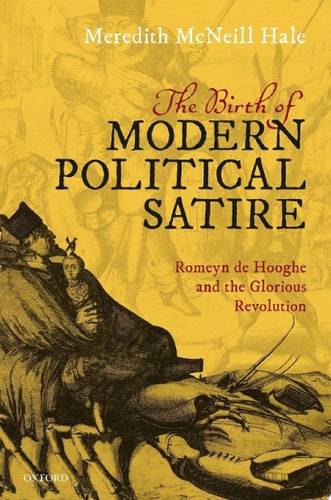
The Birth of Modern Political Satire: Romeyn de Hooghe and the Glorious Revolution
0
0
As an Amazon Associate and affiliate partner, Menrva Books earns from qualifying purchases. Learn more
Author Description
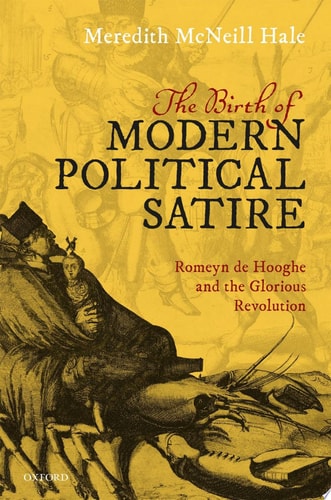
Political satire has been a primary weapon of the press since the eighteenth century and is still intimately associated with one of the most important values of western democratic society: the right of individuals to free speech. This study documents one of the most important moments in the history of printed political imagery, when political print became what we would recognise as modern political satire. Contrary to conventional historical and art historical narratives, which place the emergence of political satire in the news-driven coffee-house culture of eighteenth-century London, Meredith M. Hale locates the birth of the genre in the late seventeenth-century Netherlands in the contentious political milieu surrounding William III's invasion of England known as the 'Glorious Revolution'. The satires produced between 1688 and 1690 by the Dutch printmaker Romeyn de Hooghe on the events surrounding William III's campaigns against James II and Louis XIV establish many of the qualities that define the genre to this day: the transgression of bodily boundaries; the interdependence of text and image; the centrality of dialogic text to the generation of meaning; serialized production; and the emergence of the satirist as a primary participant in political discourse. This study, the first in-depth analysis of De Hooghe's satires since the nineteenth century, considers these prints as sites of cultural influence and negotiation, works that both reflected and helped to construct a new relationship between the government and the governed.
Menrva's Summary
THE THESIS
This study investigates the origins of modern political satire by challenging the conventional narrative that it emerged in eighteenth-century London, proposing instead that it began in the late seventeenth-century Netherlands. Meredith M. Hale, an art historian, utilizes a rigorous analysis of the printed works of Romeyn de Hooghe to argue that the political climate surrounding the Glorious Revolution served as the true catalyst for the genre. By examining the intersection of Dutch print culture and the campaigns of William III, the author demonstrates how these specific works established the foundational mechanics of modern political commentary.
THE SCOPE MAP
What You Will Find
- Analysis of political prints produced between 1688 and 1690.
- Examination of the work of Dutch printmaker Romeyn de Hooghe.
- Exploration of the relationship between the Glorious Revolution and the evolution of free speech.
- Discussion of the interplay between text and image in early modern media.
Scope Limits
- The study does not focus on the broader history of English political satire beyond its connection to De Hooghe.
- It does not provide a comprehensive biography of Romeyn de Hooghe outside of his role in political printmaking.
THE AUTHORITY PERSPECTIVE
Experts recognize this work as a significant contribution to the study of visual culture and political history, noting its success in re-evaluating the timeline of satirical development. Readers frequently highlight the academic density of the prose and the author's meticulous attention to the historical context of seventeenth-century Dutch prints.
Page Count:
299
Publication Date:
2020-01-01
Publisher:
OUP Oxford
ISBN-10:
0192573322
ISBN-13:
9780192573322
History
Satire
European History
European
17th Century
Art History
Community Tags
Similar Books