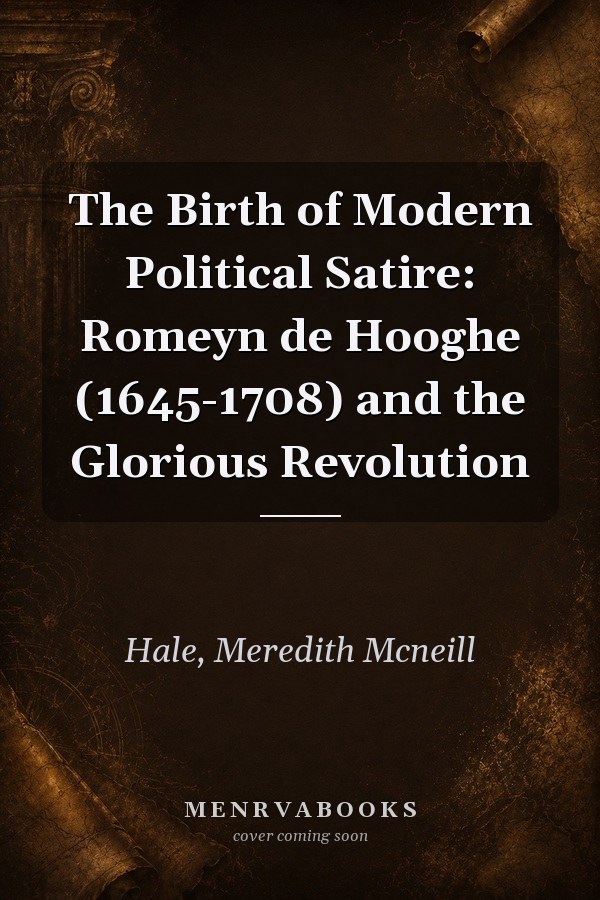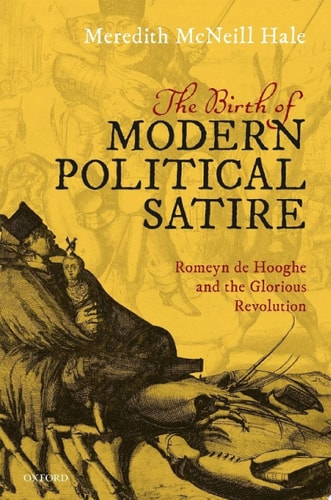
The Birth of Modern Political Satire: Romeyn de Hooghe (1645-1708) and the Glorious Revolution
0
0
As an Amazon Associate and affiliate partner, Menrva Books earns from qualifying purchases. Learn more
Author Description
Cover -- The Birth Of Modern Political Satire: Romeyn De Hooghe (1645-1708) And The Glorious Revolution -- Copyright -- Dedication -- Acknowledgements -- Contents -- List Of Figures -- List Of Abbreviations -- Chapter 1: Introduction: The Birth Of Modern Political Satire: Romeyn De Hooghe (1645-1708) And The Glorious Revolution -- I. The Genre Of Political Satire -- Ii. Romeyn De Hooghe: Literature And Biography -- The Structure Of The Book -- Notes -- Chapter 2: The Roots Of Modern Political Satire -- I. The Roots Of Modern Political Satire -- Ii. The Depiction Of Individuals -- Notes Chapter 3: Satires On Foreign Subjects: The End Of The Absolute Monarch -- I. Negotiating The Stadhoudership -- Ii. A Catholic Heir -- Iii. The Glorious Revolution -- Iv. The Sovereign Body -- Notes -- Chapter 4: Satires On Domestic Subjects: William Iii And Amsterdam -- I. 1674: The Death Of The Eternal Edict And The Triumph Of Orangism -- Ii. De Fabel Van De Koeyen, De Herder, En De Wolf: A Tale Of Regent Treachery -- Iii. William Iii And Amsterdam, 1690 -- Iv. Hollands Hollende Koe: An Anti-williamite Satire -- V. Mardi Gras De Cocq A L'ane: A Carnival Of Satire Vi. Nieuw Liedt: Singing To A French Tune -- Notes -- Chapter 5: Text, Image, And The Performance Of Satire -- I. The Broadsheet -- Ii. Text And Image: A Collaborative Endeavour -- Iii. The Materiality Of Text -- Notes -- Chapter 6: The Role Of The Satirist And The Problem Of Moral Conviction -- I. Satire And 'truth' -- Ii. Romeyn De Hooghe And The Pamphlet War Of 1690 -- Iii. The Instability Of Reputation -- Iv. Romeyn De Hooghe's Reputation -- Notes -- Chapter 7: Conclusion: The Geography Of Satire -- Notes -- Bibliography -- Index Meredith Mcneill Hale. Electronic Reproduction. Oxford Available Via World Wide Web.
Menrva's Summary
THE THESIS
This work investigates the emergence of modern political satire by analyzing the visual and textual contributions of Dutch artist Romeyn de Hooghe during the late 17th century. Meredith Mcneill Hale, an art historian, utilizes a rigorous examination of de Hooghe’s broadsheets and pamphlets to argue that his work fundamentally altered the relationship between political imagery and public discourse. By situating de Hooghe within the context of the Glorious Revolution and the rise of William III, the author demonstrates how satire became a potent instrument for shaping public opinion and challenging monarchical authority.
THE SCOPE MAP
What You Will Find
- Analysis of Dutch political pamphlets and broadsheets from 1645 to 1708.
- Examination of the intersection between visual art and political rhetoric.
- Case studies on the depiction of William III and the political climate of Amsterdam.
- Exploration of the materiality of print culture in the early modern period.
Scope Limits
- The study focuses primarily on the Dutch context and does not provide a comprehensive global history of satire.
- It does not attempt to cover the evolution of political satire beyond the early 18th century.
THE AUTHORITY PERSPECTIVE
Scholars recognize this text as a significant contribution to the study of early modern visual culture and political communication. Readers frequently note the academic density of the prose, which provides a detailed, evidence-based look at the mechanics of 17th-century propaganda.
Page Count:
288
Publication Date:
2020-01-01
Publisher:
Oxford University Press,
ISBN-10:
0192573314
ISBN-13:
9780192573315
History
Satire
17th Century
Art History
European History
Politics & Government
Community Tags
Similar Books