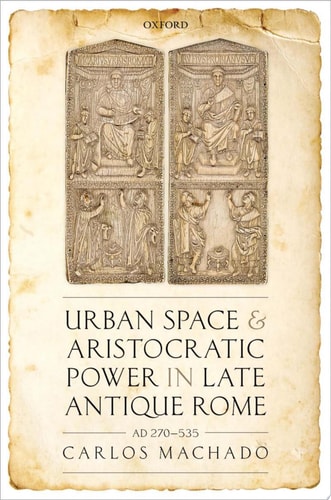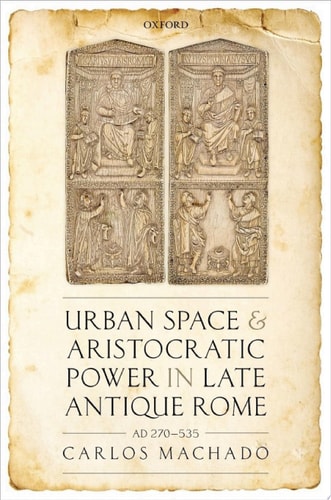
Urban Space and Aristocratic Power in Late Antique Rome: AD 270-535
0
0
As an Amazon Associate and affiliate partner, Menrva Books earns from qualifying purchases. Learn more
Author Description
Between 270 And 535 Ad The City Of Rome Experienced Dramatic Changes. The Once Glorious Imperial Capital Was Transformed Into The Much Humbler Centre Of Western Christendom In A Process That Redefined Its Political Importance, Size, And Identity. Urban Space And Aristocratic Power In Late Antique Rome Examines These Transformations By Focusing On The City's Powerful Elite, The Senatorial Aristocracy, And Exploring Their Involvement In A Process Of Urban Change That Would Mark The End Of The Ancient World And The Birth Of The Middle Ages In The Eyes Of Contemporaries And Modern Scholars. It Argues That The Late Antique History Of Rome Cannot Be Described As Merely A Product Of Decline; Instead, It Was A Product Of The Dynamic Social And Cultural Forces That Made The City Relevant At A Time Of Unprecedented Historical Changes. Combining The City's Unique Literary, Epigraphic, And Archaeological Record, The Volume Offers A Detailed Examination Of Aspects Of City Life As Diverse As Its Administration, Public Building, Rituals, Housing, And Religious Life To Show How The Late Roman Aristocracy Gave A New Shape And Meaning To Urban Space, Identifying Itself With The Largest City In The Mediterranean World To An Extent Unparalleled Since The End Of The Republican Period.
Menrva's Summary
THE THESIS
This work investigates how the senatorial aristocracy of Rome actively reshaped the city's urban landscape and political identity between AD 270 and 535. Carlos Machado, a specialist in Roman history, challenges the traditional narrative of decline by analyzing the city as a site of dynamic social and cultural adaptation. He argues that the elite class maintained relevance and authority by integrating their private interests with the public administration and religious evolution of the capital.
THE SCOPE MAP
What You Will Find
- Analysis of the intersection between senatorial power and imperial institutions.
- Examination of urban topography, including the Roman Forum and private aristocratic residences.
- Integration of literary, epigraphic, and archaeological evidence to reconstruct city life.
- Discussion of rituals, festivals, and the transition toward Christian urban identity.
Scope Limits
- The study is geographically confined to the city of Rome and its immediate urban environment.
- The analysis focuses primarily on the senatorial class rather than the broader urban populace or non-elite social strata.
THE AUTHORITY PERSPECTIVE
Scholars frequently cite this volume as a significant contribution to the study of Late Antique urbanism for its nuanced rejection of the decline-and-fall paradigm. Experts highlight the text's rigorous synthesis of diverse archaeological and textual data as a foundational resource for understanding the transition from the ancient to the medieval world.
Page Count:
352
Publication Date:
2019-01-01
Publisher:
OUP Oxford
ISBN-10:
0192571966
ISBN-13:
9780192571960
History
Ancient - Rome
Histoire
Macht
Late Antiquity
Sociology
Aristokratie
City Life
Vie urbaine
Social Class
Urban Studies
Aristocratie
Archaeology
Power Social sciences
Ancient History