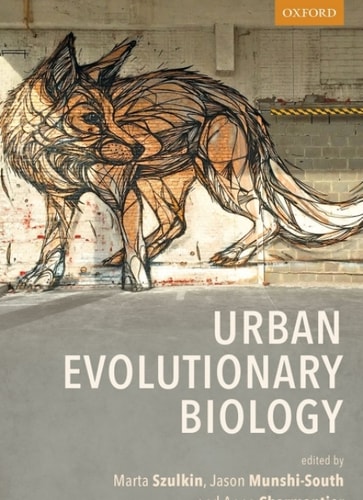
Urban Evolutionary Biology
0
0
As an Amazon Associate and affiliate partner, Menrva Books earns from qualifying purchases. Learn more
Author Description
Cities occupy approximately 3% of the Earth's habitable land area and are home to roughly half of all humans worldwide, with both estimates predicted to grow. Urban space is thus becoming an important, novel ecological niche for humans and wildlife alike. Building on knowledge gathered by urban ecologists during the last half century, evidence of evolutionary responses to urbanisation has rapidly emerged. Urban evolutionary biology is a nascent yet fast-growing field of research - and a fascinating testing ground for evolutionary biologists worldwide. Urbanisation offers a great range of opportunities to examine evolutionary processes because of the radically altered and easily quantifiable urban habitat, and the large number of cities worldwide enabling rigorous, replicated tests of evolutionary hypotheses. Urban populations are increasingly exhibiting both neutral and adaptive evolutionary changes at levels ranging from genotypes to phenotypes. The novelty of urban evolutionary biology is that these changes are driven by the cities we have built, including effects of infrastructure, pollution, and the social characteristics of our urban neighbourhoods. It will thereby enrich the field of evolutionary biology with emergent yet incredibly potent new research themes where the urban habitat is key. With contributions written by leading evolutionary biologists working on urban drivers of evolution, Urban Evolutionary Biology is the first academic book in the field. It synthesises current knowledge on evolutionary processes occurring literally on our doorstep, across the globe and in each city independently. This advanced textbook is suitable for graduate level students as well as professional researchers studying the evolutionary biology and genetics of urban environments. It is also highly relevant to urban ecologists and urban wildlife practitioners
Menrva's Summary
THE THESIS
This book investigates how the rapid expansion of urban environments acts as a novel ecological niche that drives measurable evolutionary changes in wildlife and human populations. The authors, a team of leading experts in evolutionary biology, synthesize decades of ecological research to establish a framework for understanding how infrastructure, pollution, and social urban characteristics influence genotypes and phenotypes. By treating cities as replicated testing grounds, the text argues that urbanization provides a unique, quantifiable opportunity to observe evolutionary processes in real-time across diverse global habitats.
THE SCOPE MAP
What You Will Find
- Analysis of evolutionary responses to urbanization including neutral and adaptive changes.
- Methodologies for testing evolutionary hypotheses within urban habitats.
- Examination of urban drivers such as infrastructure, pollution, and social neighborhood characteristics.
- Synthesis of current research on evolutionary biology occurring in cities globally.
Scope Limits
- The text focuses primarily on advanced academic and professional applications rather than introductory biological concepts.
- It does not provide a comprehensive history of general evolutionary theory, focusing instead on the specific intersection of urban environments and evolution.
THE AUTHORITY PERSPECTIVE
Experts recognize this work as the first comprehensive academic textbook dedicated to the field of urban evolutionary biology. Readers frequently note the high level of academic density, making it a foundational resource for graduate students and professional researchers in the biological sciences.
Page Count:
320
Publication Date:
2020-01-01
Publisher:
OUP Oxford
ISBN-10:
0192573845
ISBN-13:
9780192573841
Science
Evolution
Evolutionary Biology
Urban ecology
Biology
Genetics
Taxonomy
Community Tags
Other Editions(2)
Similar Books









Reader Comments
Share Your Thoughts
No comments yet. Be the first to share your thoughts!