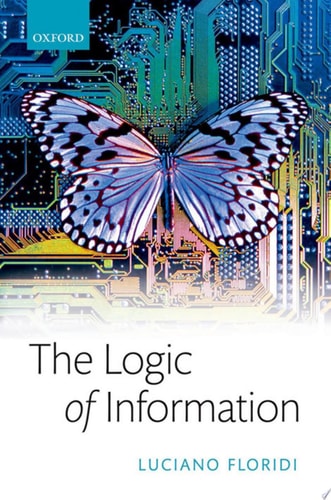
The Logic of Information
0
0
As an Amazon Associate and affiliate partner, Menrva Books earns from qualifying purchases. Learn more
Author Description
Luciano Floridi Presents An Innovative Approach To Philosophy, Conceived As Conceptual Design. He Explores How We Make, Transform, Refine, And Improve The Objects Of Our Knowledge. His Starting Point Is That Reality Provides The Data, To Be Understood As Constraining Affordances, And We Transform Them Into Information, Like Semantic Engines. Such Transformation Or Repurposing Is Not Equivalent To Portraying, Or Picturing, Or Photographing, Or Photocopying Anything. It Is More Like Cooking: The Dish Does Not Represent The Ingredients, It Uses Them To Make Something Else Out Of Them, Yet The Reality Of The Dish And Its Properties Hugely Depend On The Reality And The Properties Of The Ingredients. Models Are Not Representations Understood As Pictures, But Interpretations Understood As Data Elaborations, Of Systems. Thus, Luciano Floridi Articulates And Defends The Thesis That Knowledge Is Design And Philosophy Is The Ultimate Form Of Conceptual Design. Although Entirely Independent Of Floridi's Previous Books, The Philosophy Of Information (oup 2011) And The Ethics Of Information (oup 2013), The Logic Of Information Both Complements The Existing Volumes And Presents New Work On The Foundations Of The Philosophy Of Information.
Menrva's Summary
THE THESIS
This work investigates the core question of whether knowledge can be defined as a form of conceptual design rather than mere representation. Prof. Luciano Floridi, a prominent philosopher of technology and information, utilizes his background in analytic philosophy to argue that human cognition functions as a semantic engine. He posits that reality provides raw data, which individuals then transform and repurpose through logical elaboration, effectively treating philosophy as the ultimate design discipline.
THE SCOPE MAP
What You Will Find
- A framework defining knowledge as conceptual design
- Analysis of data as constraining affordances
- Theoretical exploration of models as interpretations rather than static representations
Scope Limits
- The text does not provide a practical manual for software engineering or data science
- It does not focus on the historical evolution of logic prior to the information age
THE AUTHORITY PERSPECTIVE
Experts recognize this volume as a significant contribution to the philosophy of information, noting its rigorous analytical approach. Readers frequently observe that the prose is dense and requires a strong background in philosophical terminology to fully grasp the author's arguments.
Page Count:
224
Publication Date:
2019-01-01
Publisher:
Oxford University Press
ISBN-10:
0192570269
ISBN-13:
9780192570260
Philosophy
Epistemology
Logic
Information Theory
Community Tags
Similar Books