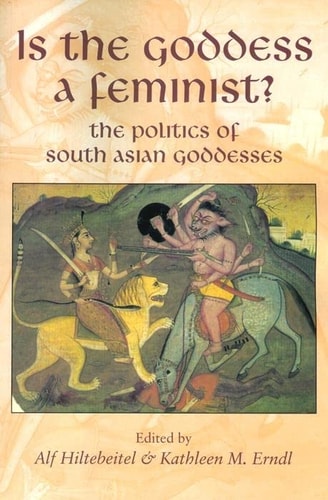
Is the Goddess a Feminist? The Politics of South Asian Goddesses
0
0
As an Amazon Associate and affiliate partner, Menrva Books earns from qualifying purchases. Learn more
Author Description
In India, God can be female. The goddesses of Hinduism and Buddhism represent the largest extant collection of living goddesses anywhere on the planet. Feminists in the West often draw upon South Asian goddesses as theological resources in the contemporary rediscovery of the Goddess. Yet, these goddesses are products of a male supremacist society. What is the impact of powerful female deities--their images, projections, textuality, and history--on the social standing and psychological health of women? Do they empower women, or serve the interests of patriarchal culture? Is the Goddess a Feminist? looks at the goddesses of South Asia to address these questions directly. Not a book about a single goddess or even about a variety of South Asian goddesses, the volume raises questions about images of deities as symbols and the ways in which they function. Contributors discuss contemporary Indian women who have embraced goddesses as spiritually and socially liberating, as well as the seeming contradictions between the power of Indian goddesses and the lives of Indian women. They also explore such topics as the element of male desire in the embodiment of female deities, the question of who speaks for the goddesses, and the politics and theology of Western feminist use of Hindu and Buddhist goddesses as models for their feminist reflections.
Menrva's Summary
THE THESIS
This book investigates the complex relationship between powerful South Asian goddesses and the social and psychological standing of women within patriarchal societies. The volume examines how these deities, originating from Hinduism and Buddhism, function as theological resources for Western feminists, while simultaneously being products of male-dominated cultures. It explores whether these goddesses empower women or reinforce patriarchal structures, analyzing contemporary Indian women's embrace of goddesses and the apparent contradictions between divine power and women's lived experiences. The contributors also address the politics of representation, male desire in deity embodiment, and the appropriation of these goddesses by Western feminist thought.
THE SCOPE MAP
- Analysis of the largest extant collection of living goddesses in Hinduism and Buddhism.
- Exploration of South Asian goddesses as theological resources for Western feminism.
- Examination of the impact of female deities on women's social standing and psychological health.
- Discussion of whether goddesses empower women or serve patriarchal interests.
- Case studies of contemporary Indian women embracing goddesses.
- Analysis of the contradictions between the power of Indian goddesses and the lives of Indian women.
- Exploration of male desire in the embodiment of female deities.
- Consideration of who speaks for the goddesses and the politics of their representation.
THE AUTHORITY PERSPECTIVE
The collection critically examines the dual nature of South Asian goddesses, acknowledging their potential as empowering figures for women while also recognizing their origins within patriarchal systems. Contributors grapple with the complex interplay between divine imagery, textual representation, and the lived realities of women in India and in Western feminist discourse. The volume raises pertinent questions about the appropriation and interpretation of these deities, highlighting the nuanced ways in which they can both liberate and constrain.
Page Count:
287
Publication Date:
2000-11-01
Publisher:
NYU Press
ISBN-10:
0814736181
ISBN-13:
9780814736180
History
Religion
Non-Fiction
Feminism
Sociology
Theology
Community Tags
Similar Books