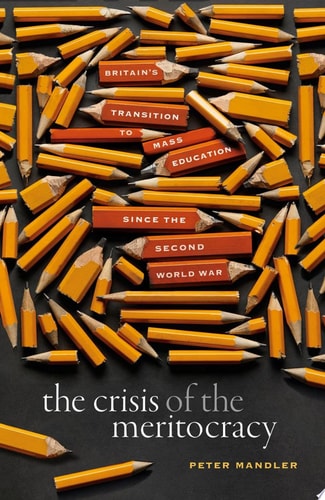
The Crisis of the Meritocracy
0
0
As an Amazon Associate and affiliate partner, Menrva Books earns from qualifying purchases. Learn more
Author Description
Before The Second World War, Only About 20% Of The Population Went To Secondary School And Barely 2% To University; Today Everyone Goes To Secondary School And Half Of All Young People Go To University. How Did We Get Here From There? The Crisis Of The Meritocracy Answers This Question Not By Looking To Politicians And Educational Reforms, But To The Revolution In Attitudes And Expectations Amongst The Post-war British Public - The Rights Guaranteed By The Welfare State, The Hope Of A Better Life For One's Children, Widespread Upward Mobility From Manual To Non-manual Occupations, Confidence In The Importance Of Education In A 'learning Society' And A 'knowledge Economy'. As A Result Of These Transformations, 'meritocracy' - The Idea That A Few Should Be Selected To Succeed - Has Been Challenged By Democracy And Its Wider Understandings Of Equal Opportunity Across The Life Course. At A Time When Doubts Have Arisen About Whether We Need So Many Students, And Amidst Calls For A Return To Grammar-school Selection At 11, The Tension Between Meritocracy And Democracy Remains Vital To Understanding Why Our Grandparents, Our Parents, Ourselves And Our Children Have Sought And Got More And More Education - And To What End.
Menrva's Summary
THE THESIS
This book investigates the historical transformation of the British educational system and the evolving public attitudes that drove the expansion of secondary and university schooling. Peter Mandler, a professor of modern cultural history, utilizes a synthesis of social history and public opinion data to argue that the shift toward mass education was fueled by grassroots aspirations for upward mobility and the welfare state's promise of equal opportunity. He posits that the tension between the elitist concept of meritocracy and the democratic demand for universal access remains the defining conflict of modern educational policy.
THE SCOPE MAP
What You Will Find
- Analysis of the transition from 20% secondary school attendance to near-universal participation.
- Examination of the post-war British public's changing expectations regarding social mobility.
- Historical context on the rise of the 'learning society' and 'knowledge economy' narratives.
Scope Limits
- The text does not provide a comprehensive policy manual for current educational reform.
- It focuses primarily on the British experience rather than a global comparative analysis of meritocratic systems.
THE AUTHORITY PERSPECTIVE
Historians and sociologists frequently cite this work for its nuanced rejection of top-down political explanations in favor of cultural shifts. Experts highlight the text as a critical resource for understanding the historical roots of contemporary debates surrounding selection and educational access.
Page Count:
368
Publication Date:
2020-01-01
Publisher:
Oxford University Press
ISBN-10:
0192576461
ISBN-13:
9780192576460
History
Sociology
Social policy
British History
Education
Community Tags
Similar Books