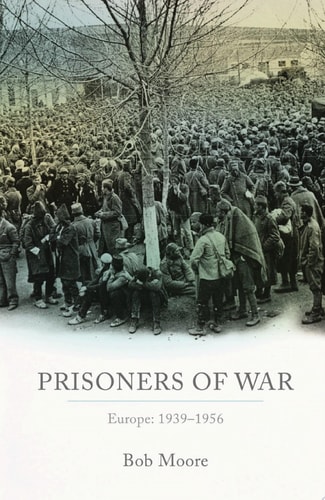
Prisoners of War: Europe: 1939-1956
0
0
As an Amazon Associate and affiliate partner, Menrva Books earns from qualifying purchases. Learn more
Author Description
The Second World War between the European Axis powers and the Allies saw more than twenty million soldiers taken as prisoners of war. While this total is inflated by the unconditional surrender of all German forces in Europe on 8 May 1945, it nonetheless highlights the fact that captivity was one of the most common experiences for all those in uniform - even more common than frontline service. Despite this, and the huge literature on so many aspects of the war, prisoner of war histories have remained a separate and sometimes isolated element in the wider national chronicles of the conflict constructed in the post war era. Prisoners of every nationality had their own narratives of military service and captivity. While it is impossible to encompass their collective histories, let alone the individual experiences of all twenty million prisoners in a single volume, Bob Moore uses a series of case studies to highlight the key elements involved and to introduce, analyse, and refine some of the major debates that have arisen in the existing historiography. The study is divided into three broad sections: captivity in Eastern and Western Europe during the war itself, comparative studies of specific categories of prisoners, and the repatriation and reintegration of prisoners after the war.
Menrva's Summary
THE THESIS
This work investigates the systemic experiences of the twenty million soldiers held as prisoners of war in Europe between 1939 and 1956. Bob Moore, a historian specializing in the social and military history of the Second World War, utilizes a comparative framework to synthesize fragmented national narratives into a cohesive analysis. By examining the conditions of captivity and the subsequent challenges of repatriation, the author addresses the historiographical gaps that have historically isolated the prisoner of war experience from broader conflict studies.
THE SCOPE MAP
What You Will Find
- Analysis of captivity conditions in both Eastern and Western European theaters.
- Comparative methodology focusing on specific categories of prisoners across different nations.
- Examination of post-war repatriation and the social reintegration of former captives.
Scope Limits
- The text does not attempt to provide an exhaustive individual account of all twenty million prisoners.
- The study focuses primarily on the European theater and does not cover Pacific or Asian prisoner of war experiences.
THE AUTHORITY PERSPECTIVE
Experts recognize this volume as a significant contribution to military historiography for its ability to synthesize disparate national accounts into a unified comparative study. Readers frequently note that the prose is academically rigorous and provides a necessary structural overview for those studying the social consequences of the Second World War.
Page Count:
559
Publication Date:
2022-01-01
Publisher:
OUP Oxford
ISBN-10:
0192576801
ISBN-13:
9780192576804
History
Military History
European History
Modern History
World War
Prisoners of War