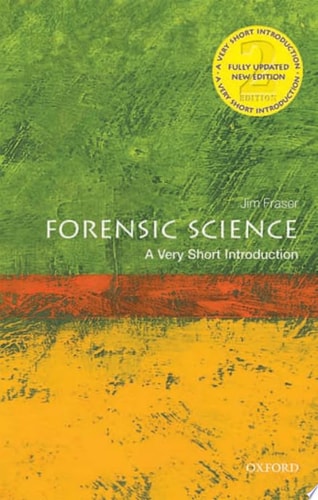
Forensic Science: A Very Short Introduction
0
0
As an Amazon Associate and affiliate partner, Menrva Books earns from qualifying purchases. Learn more
Author Description
Forensic Science Is A Subject Of Wide Fascination. What Happens At A Crime Scene? How Does Dna Profiling Work? How Can It Help Solve Crimes That Happened 20 Years Ago? In Forensic Science, A Criminal Case Can Often Hinge On A Piece Of Evidence Such As A Hair, A Blood Trace, Half A Footprint, Or A Tyre Mark. Complex Scientific Findings Must Be Considered Carefully And Dispassionately, And Communicated With Clarity, Simplicity, And Precision. High Profile Cases Such As The Stephen Lawrence Enquiry And The Madeleine Mccann Case Have Attracted Enormous Media Attention And Enhanced General Interest In This Area In Recent Years. In This Very Short Introduction, Jim Fraser Introduces The Concept Of Forensic Science And Explains How It Is Used In The Investigation Of Crime. He Begins At The Crime Scene Itself, Explaining The Principles And Processes Of Crime Scene Management, And Drawing On His Own Personal Experience Of High Profile Cases Including, The Murder Of Rachel Nickell And The Unsolved Murder Of Jill Dando. Fraser Explores How Forensic Scientists Work; From The Reconstruction Of Events To Laboratory Examinations. He Considers The Techniques They Use, Such As Fingerprinting, And Goes On To Highlight The Immense Impact Dna Profiling Has Had. Providing Examples From Forensic Science Cases In The Uk, Us, And Other Countries, He Considers The Techniques And Challenges Faced Around The World. This New Edition Has Been Fully Updated To Take Into Account Developments In Areas Such As Dna Analysis And Drug Analysis, And The Growing Field Of Digital Forensics. Topical Areas Explored Include The Growing Significance Of Cognitive Bias In Forensic Science, And Recent Research That Raises Doubts About The Validity Of Some Forensic Techniques. About The Series: The Very Short Introductions Series From Oxford University Press Contains Hundreds Of Titles In Almost Every Subject Area. These Pocket-sized Books Are The Perfect Way To Get Ahead In A New Subject Quickly.
Menrva's Summary
THE THESIS
This book investigates the fundamental principles, methodologies, and evolving challenges of forensic science within the modern criminal justice system. Author Jim Fraser, a seasoned expert with extensive experience in high-profile criminal investigations, utilizes his professional background to explain how scientific evidence is collected, analyzed, and presented in court. He argues that while forensic science is a powerful tool for justice, it requires rigorous management and an awareness of cognitive biases to maintain its validity and reliability.
THE SCOPE MAP
What You Will Find
- Principles of crime scene management and evidence preservation
- Technical overviews of DNA profiling, fingerprinting, and drug analysis
- Emerging developments in digital forensics and cognitive bias research
- Comparative analysis of forensic practices in the UK, US, and international jurisdictions
Scope Limits
- Does not provide a comprehensive manual for conducting forensic laboratory work
- Does not offer an exhaustive legal guide for courtroom testimony
THE AUTHORITY PERSPECTIVE
Experts and readers frequently highlight this text as a concise, accessible entry point for understanding the complexities of forensic investigation. The prose is noted for its clarity, making technical scientific concepts understandable for a general audience while maintaining academic integrity.
Page Count:
160
Publication Date:
2020-01-01
Publisher:
Oxford University Press
ISBN-10:
0192571257
ISBN-13:
9780192571250
True Crime
Science
Earth Sciences
Forensic Science
Law
Reference
Criminology
Community Tags
Other Editions(3)
Similar Books







Reader Comments
Share Your Thoughts
No comments yet. Be the first to share your thoughts!