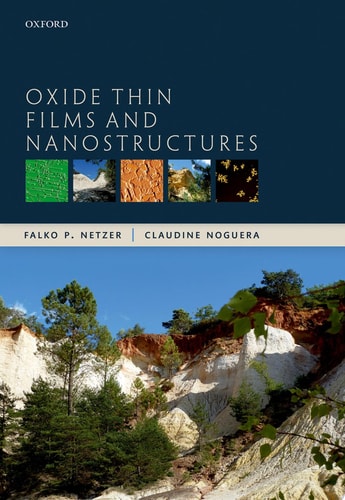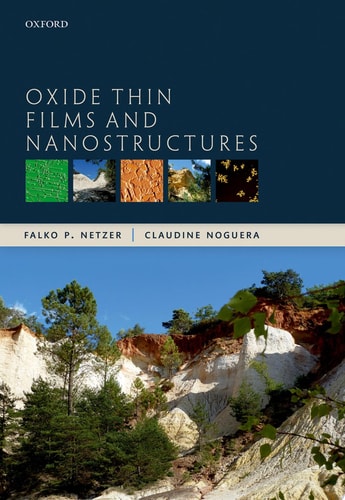
Oxide Thin Films and Nanostructures
0
0
As an Amazon Associate and affiliate partner, Menrva Books earns from qualifying purchases. Learn more
Author Description
Nanostructured oxide materials - ultra-thin films, nanoparticles and other nanometer-scale objects - play prominent roles in many aspects of our every-day life, in nature and in technological applications, among which is the all-oxide electronics of tomorrow. Due to their reduced dimensions and dimensionality, they strongly interact with their environment: gaseous atmosphere, water or support. Their novel physical and chemical properties are the subject of this book, from both a fundamental and an applied perspective. Oxide Thin Films and Nanostructures reviews and illustrates the various methodologies for their growth, fabrication, experimental and theoretical characterization. The role of key parameters such as film thickness, nanoparticle size and support interactions in driving their fundamental properties is underlined. At the ultimate thickness limit, two-dimensional oxide materials are generated, whose functionalities and potential applications are described. The emerging field of cation mixing is mentioned, which opens new avenues for engineering many oxide properties, as witnessed by natural oxide nanomaterials such as clay minerals, which, beyond their role at the Earth's surface, are now widely used in a whole range of human activities. Oxide nanomaterials are involved in many interdisciplinary fields of advanced nanotechnologies. Catalysis, photocatalysis, solar energy materials, fuel cells, corrosion protection, and biotechnological applications are amongst the areas where they are making an impact. The book outlines prototypical examples. A cautious glimpse into future developments of scientific activity is finally ventured to round off the presentation.
Menrva's Summary
THE THESIS
This text investigates the fundamental physical and chemical properties of nanostructured oxide materials and their potential for technological application. Authors Claudine Noguera and Falko P. Netzer synthesize current research on ultra-thin films and nanoparticles, providing a framework for understanding how reduced dimensionality influences material behavior. The book bridges the gap between theoretical characterization and practical fabrication methodologies in the field of advanced nanotechnology.
THE SCOPE MAP
What You Will Find
- Methodologies for the growth and fabrication of oxide nanostructures
- Analysis of key parameters including film thickness, particle size, and support interactions
- Examination of two-dimensional oxide materials and cation mixing
- Applications in catalysis, solar energy, fuel cells, and biotechnology
Scope Limits
- The text focuses primarily on physical and chemical properties rather than exhaustive industrial manufacturing protocols
- It does not provide a comprehensive history of all oxide research, focusing instead on modern nanostructured developments
THE AUTHORITY PERSPECTIVE
Experts recognize this work as a comprehensive reference for researchers and graduate students working in materials science and surface physics. Readers frequently note the technical density of the prose, which effectively balances fundamental theory with applied technological examples.
Page Count:
352
Publication Date:
2021-01-01
Publisher:
OUP Oxford
ISBN-10:
0192571605
ISBN-13:
9780192571601
Science
Physics
Earth Sciences
Chemistry
Nanotechnology
Engineering