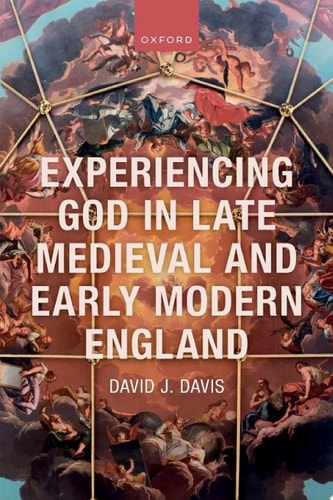
Experiencing God in Late Medieval and Early Modern England
0
0
As an Amazon Associate and affiliate partner, Menrva Books earns from qualifying purchases. Learn more
Author Description
Experiencing God in Late Medieval and Early Modern England demonstrates that experiences of divine revelation, both biblical and contemporary, were central to late medieval and early modern English religion. The book sheds light on previously under-explored notions about divine revelation and the role these notions played in shaping large portions of English thought and belief. Bringing together a wide variety of source materials, from contemplative works and accounts of revelatory experiences to biblical commentaries, devotionals, and religious imagery, David J. Davis argues that in the period there was a collective representation of divine revelation as a source of human knowledge, which transcended other religious and intellectual divisions. Not only did most people think that divine revelation, through a ravishing encounter with God, was possible, but also divine revelation was understood to be the pinnacle of religious experience and a source of pure understanding. The book highlights a common discourse running through the sources that underpinned this collective representation of how human beings experienced the divine, and it demonstrates a continual effort across large swathes of English religion to prepare an individual's soul for an encounter with the divine, through different spiritual disciplines and devotional practices. Over a period of several centuries this discourse and the larger culture of revelation provided an essential structure and legitimacy both to contemporary claims of divine revelation and the biblical precedents that contemporary experiences were modelled after. This discourse detailed the physical, metaphysical, and epistemological features of how a human being was understood to experience divine revelation, providing a means to delimit and define what happened when an individual was rapture by God. Finally, the book situates the experience of revelation within the wider context of knowledge and identifies the ways that claims to divine
Menrva's Summary
THE THESIS
This book investigates how the concept of divine revelation functioned as a central, unifying pillar of religious knowledge and experience in England from the late medieval period through the early modern era. David J. Davis, a scholar of religious history, synthesizes a broad range of primary sources to argue that a collective cultural understanding of 'revelation' transcended the theological and intellectual fractures of the time. He posits that the pursuit of a direct, ravishing encounter with the divine served as a foundational framework for both personal devotion and the broader epistemological landscape of the period.
THE SCOPE MAP
What You Will Find
- Analysis of contemplative literature, biblical commentaries, and devotional texts.
- Examination of religious imagery and its role in mediating divine encounters.
- A framework detailing the physical, metaphysical, and epistemological definitions of rapture.
- Historical evidence of spiritual disciplines designed to prepare the soul for divine contact.
Scope Limits
- The study focuses primarily on English religious thought and may not account for continental European variations.
- The analysis is limited to the specific discourse of revelation and does not provide a comprehensive history of all religious practices of the era.
THE AUTHORITY PERSPECTIVE
Scholars and historians identify this work as a significant contribution to the study of pre-modern religious epistemology and the continuity of spiritual practices across the Reformation divide. Readers frequently note the academic density of the prose, which is well-suited for researchers and students of religious history seeking to understand the mechanics of early modern belief systems.
Page Count:
237
Publication Date:
2022-01-01
Publisher:
OUP Oxford
ISBN-10:
0192570862
ISBN-13:
9780192570864
Religion
History
Christianity
Cultural History
European History
Theology
History - Modern
Community Tags
Other Editions(2)

Similar Books






Reader Comments
Share Your Thoughts
No comments yet. Be the first to share your thoughts!