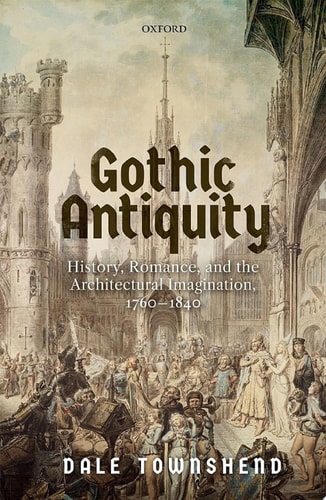
Gothic Antiquity: History, Romance, and the Architectural Imagination, 1760-1840
0
0
As an Amazon Associate and affiliate partner, Menrva Books earns from qualifying purchases. Learn more
Author Description
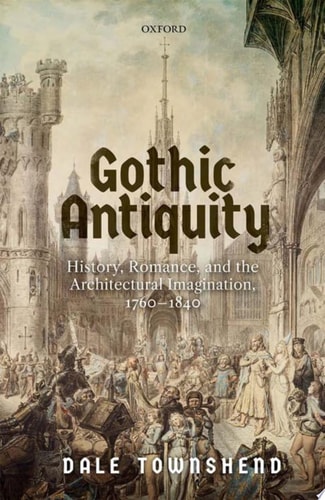
Gothic Antiquity: History, Romance, and the Architectural Imagination, 1760-1840 provides the first sustained scholarly account of the relationship between Gothic architecture and Gothic literature (fiction; poetry; drama) in the late eighteenth and early nineteenth centuries. Although the relationship between literature and architecture is a topic that has long preoccupied scholars of the literary Gothic, there remains, to date, no monograph-length study of the intriguing and complex interactions between these two aesthetic forms. Equally, Gothic literature has received only the most cursory of treatments in art-historical accounts of the early Gothic Revival in architecture, interiors, and design. In addressing this gap in contemporary scholarship, Gothic Antiquity seeks to situate Gothic writing in relation to the Gothic-architectural theories, aesthetics, and practices with which it was contemporary, providing closely historicized readings of a wide selection of canonical and lesser-known texts and writers. Correspondingly, it shows how these architectural debates responded to, and were to a certain extent shaped by, what we have since come to identify as the literary Gothic mode. In both its 'survivalist' and 'revivalist' forms, the architecture of the Middle Ages in the long eighteenth century was always much more than a matter of style. Incarnating, for better or for worse, the memory of a vanished 'Gothic' age in the modern, enlightened present, Gothic architecture, be it ruined or complete, prompted imaginative reconstructions of the nation's past—a notable 'visionary' turn, as the antiquary John Pinkerton put it in 1788, in which Gothic writers, architects, and antiquaries enthusiastically participated. The volume establishes a series of dialogues between Gothic literature, architectural history, and the antiquarian interest in the material remains of the Gothic past, and argues that these discrete yet intimately related approaches to vernacular antiquity
Menrva's Summary
THE THESIS
This book investigates the reciprocal relationship between Gothic architecture and Gothic literature during the late eighteenth and early nineteenth centuries. Dale Townshend, a scholar of the Gothic, examines how architectural theories and literary narratives informed one another during the Gothic Revival. By analyzing both canonical and lesser-known texts alongside architectural history, the author argues that these two aesthetic forms were deeply intertwined in their efforts to reconstruct the national past.
THE SCOPE MAP
What You Will Find
- Historical analysis of the Gothic Revival from 1760 to 1840
- Comparative study of literary texts, poetry, and drama alongside architectural design
- Examination of antiquarian practices and the material remains of the Middle Ages
- Theoretical frameworks regarding the 'survivalist' and 'revivalist' forms of Gothic architecture
Scope Limits
- The study focuses primarily on the British context and the specific timeframe of 1760-1840
- It does not provide an exhaustive survey of all Gothic architecture globally, focusing instead on the intersection with literary imagination
THE AUTHORITY PERSPECTIVE
Scholars recognize this work as a significant contribution to the field for its interdisciplinary approach to the Gothic mode. Experts highlight the text as a foundational resource for those seeking to understand the intersection of architectural history and literary studies in the long eighteenth century.
Page Count:
431
Publication Date:
2019-01-01
Publisher:
OUP Oxford
ISBN-10:
019258443X
ISBN-13:
9780192584434
Architecture
History
Gothic Studies
Architecture and literature
Gothic revival Architecture
Indigenous
19th Century
18th century
Literary Criticism
Community Tags
Other Editions(2)
Similar Books
Reader Comments
Share Your Thoughts
No comments yet. Be the first to share your thoughts!