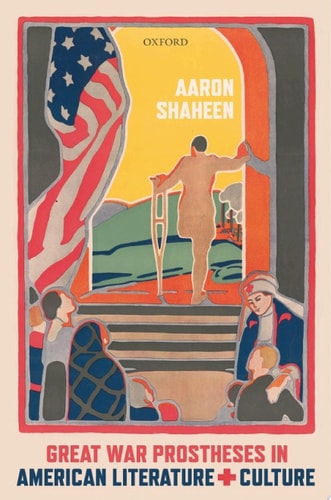
Great War Prostheses in American Literature and Culture
0
0
As an Amazon Associate and affiliate partner, Menrva Books earns from qualifying purchases. Learn more
Author Description
Drawing on rehabilitation publications, novels by both famous and obscure American writers, and even the prosthetic masks of a classically trained sculptor, Great War Prostheses in American Literature and Culture addresses the ways in which prosthetic devices were designed, promoted, and depicted in America in the years during and after the First World War. The war's mechanized weaponry ushered in an entirely new relationship between organic bodies and the technology that could both cause, and attempt to remedy, hideous injuries. Such a relationship was also evident in the realm of prosthetic development, which by the second decade of the twentieth century promoted the belief that a prosthesis should be a spiritual extension of the person who possessed it. This spiritualized vision of prostheses proved particularly resonant in American postwar culture. Relying on some of the most recent developments in literary and disability studies, the book's six chapters explain how a prosthesis's spiritual promise was largely dependent on its ability to nullify an injury and help an amputee renew or even improve upon his prewar life. But if it proved too cumbersome, obtrusive, or painful, the device had the long-lasting power to efface or distort his 'spirit' or personality.
Menrva's Summary
THE THESIS
This book investigates how the development and cultural representation of prosthetic devices during and after World War I shaped American perceptions of the relationship between mechanized injury and the human spirit. Aaron Shaheen, a scholar in American literature, utilizes a multidisciplinary framework to analyze how medical rehabilitation literature and literary narratives constructed a spiritualized vision of prosthetics. The work argues that these devices were intended to restore an amputee's prewar identity, though their physical limitations often resulted in psychological conflict.
THE SCOPE MAP
What You Will Find
- Analysis of early 20th-century prosthetic design and promotion
- Examination of literary depictions of amputees in American fiction
- Integration of disability studies theory with historical medical records
- Case studies involving prosthetic masks and rehabilitation publications
Scope Limits
- The study focuses primarily on American cultural and literary contexts
- It does not provide a comprehensive technical history of all prosthetic engineering advancements
THE AUTHORITY PERSPECTIVE
Scholars in the fields of disability studies and literary history note the book's effectiveness in bridging the gap between medical history and cultural narrative. Readers frequently highlight the text's ability to synthesize complex theoretical frameworks with specific historical artifacts.
Page Count:
260
Publication Date:
2020-01-01
Publisher:
OUP Oxford
ISBN-10:
0192599623
ISBN-13:
9780192599629
History
English
Prosthesis
English & College Success
American
World War
Disabilities
Literary Criticism
Community Tags
Similar Books