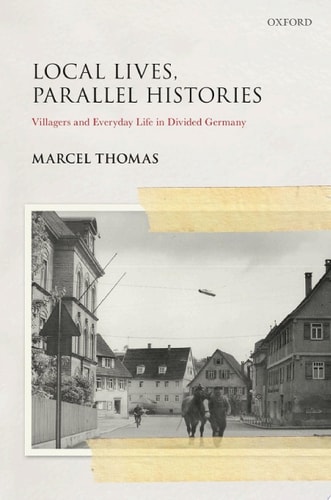
Local Lives, Parallel Histories
0
0
As an Amazon Associate and affiliate partner, Menrva Books earns from qualifying purchases. Learn more
Author Description
The Division Of Germany Separated A Nation, Divided Communities, And Inevitably Shaped The Life Histories Of Those Growing Up In The Socialist Dictatorship Of The East And The Liberal Democracy Of The West. This Peculiarly German Experience Of The Cold War Is Usually Viewed Through The Lens Of Divided Berlin Or Other Border Communities. What Has Been Much Less Explored, However, Is What Division Meant To The Millions Of Germans In The East And West Who Lived Far Away From The Wall And The Centres Of Political Power. This Volume Is The First Comparative Study To Examine How Villagers In Both Germanies Dealt With The Imposition Of Two Very Different Systems In Their Everyday Lives. Focusing On Two Villages, Neukirch (lausitz) In Saxony And Ebersbach An Der Fils In Baden-württemberg, It Explores How Local Residents Experienced And Navigated Social Change In Their Localities In The Postwar Era. Based On A Wide Range Of Archival Sources As Well As Oral History Interviews, The Work Argues That There Are Parallel Histories Of Responses To Social Change Among Villagers In Postwar Germany. Despite The Different Social, Political, And Economic Developments, The Residents Of Both Localities Desired Rural Modernisation, Lamented The Loss Of 'community', And Became Politically Active To Control The Transformation Of Their Localities. The Work Thereby Offers A Bottom-up History Of Divided Germany Which Shows How Individuals On Both Sides Of The Wall Gave Local Meaning To Large-scale Processes Of Change.
Menrva's Summary
THE THESIS
This study investigates how the division of Germany during the Cold War shaped the everyday lives and social responses of residents living in rural villages far from the political centers of power. Marcel Thomas utilizes a comparative historical framework to analyze the experiences of citizens in the socialist East and the liberal West. By synthesizing archival research with oral history interviews, the author argues that despite vastly different political systems, villagers in both regions exhibited parallel desires for modernization and community preservation while actively engaging in local political transformation.
THE SCOPE MAP
What You Will Find
- A comparative analysis of two specific villages: Neukirch in Saxony and Ebersbach an der Fils in Baden-Württemberg.
- An examination of rural modernization processes in post-war Germany.
- A methodology focused on bottom-up history, prioritizing local resident perspectives over state-level narratives.
Scope Limits
- The study does not focus on the experiences of urban populations or those living in immediate proximity to the Berlin Wall or the inner-German border.
THE AUTHORITY PERSPECTIVE
Scholars and historians recognize this work as a significant contribution to the social history of divided Germany by shifting the focus away from major political centers. Readers frequently note the academic rigor of the comparative methodology and the value of the oral history interviews in providing a nuanced understanding of post-war rural life.
Page Count:
319
Publication Date:
2020-01-01
Publisher:
Oxford University Press
ISBN-10:
0192598244
ISBN-13:
9780192598240
History
Rural Studies
European History
Social History
Cold War
Germany
Community Tags
Similar Books