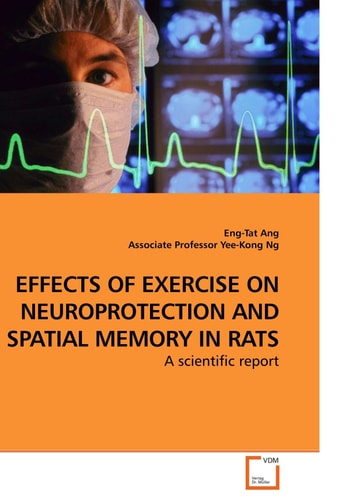
Effects of Exercise on Neuroprotection and Spatial Memory in Rats: A Scientific Report
0
0
As an Amazon Associate and affiliate partner, Menrva Books earns from qualifying purchases. Learn more
Author Description
This book aims to elucidate the effects of physical exercise on neuroprotection and spatial memory in the rat brain. Via an array of molecular, histological and behavioral investigations, there are evidences to suggest that physical exercise could increase the number of cholinergic neurons in the septum. This could be due to increased trophic support from NGF and its p75 receptor. The microenvironment in the septum was changed after 12 weeks of training as detected by glial cells markers. Enhanced spatial learning and memory in the runners could be the result of increased cholinergic neurons in the septum due to trophic support from NGF. It is proposed that all the above effects contributed to the reduction of infarct volume in the runner/stroke model. Lastly, cDNA microarray results established a multitude of other genetic changes associated with running and stroke in the basal forebrain. In conclusion, physical exercise has contributed to neuroprotection and helped in improving spatial learning and memory in rats.
Menrva's Summary
THE THESIS
This report investigates the impact of physical exercise on the neuroprotective capabilities and spatial memory retention within the rat brain. The study employs a combination of molecular, histological, and behavioral analyses to demonstrate that regular exercise can lead to an increase in cholinergic neurons in the septum, potentially due to enhanced trophic support from Nerve Growth Factor (NGF) and its p75 receptor. Findings indicate that a 12-week training regimen alters the septal microenvironment, evidenced by changes in glial cell markers, and that these alterations contribute to improved spatial learning and memory in exercising rats. The research further proposes that these effects play a role in reducing infarct volume in a stroke model and identifies numerous genetic changes associated with running and stroke in the basal forebrain through cDNA microarray analysis.
THE SCOPE MAP
- Investigation into the increase of cholinergic neurons in the septum due to physical exercise.
- Analysis of trophic support mechanisms involving NGF and its p75 receptor.
- Histological examination of changes in the septal microenvironment using glial cell markers after 12 weeks of training.
- Behavioral assessments to determine enhanced spatial learning and memory in exercising rats.
- Exploration of the reduction in infarct volume in a runner/stroke model.
- cDNA microarray analysis to identify genetic changes in the basal forebrain related to running and stroke.
- Molecular investigations into neuroprotection and spatial memory.
THE AUTHORITY PERSPECTIVE
This scientific report details a rigorous investigation into the effects of exercise on neuroprotection and spatial memory in rats. The methodology, encompassing molecular, histological, and behavioral studies, provides a comprehensive look at the physiological changes occurring in the rat brain. The findings suggest a strong correlation between physical activity and improved cognitive function, particularly in spatial memory, and offer insights into the underlying cellular and genetic mechanisms. The detailed analysis and proposed mechanisms contribute to the understanding of exercise's role in brain health and recovery from neurological insults.
Page Count:
196
Publication Date:
2010-03-10
Publisher:
VDM Verlag Dr. Müller
ISBN-10:
3639233514
ISBN-13:
9783639233513
Science
Non-Fiction
Physiology
Animal models
Neuroscience
Community Tags
Similar Books