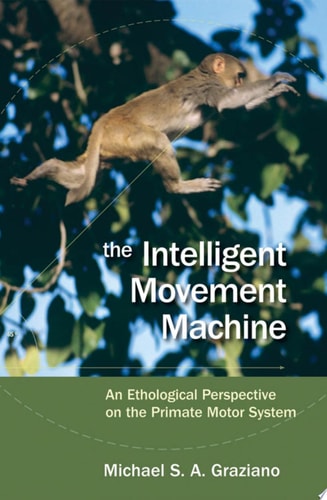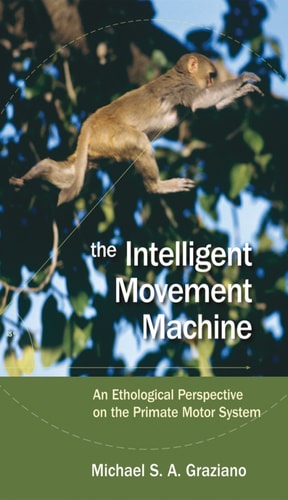
The Intelligent Movement Machine: An Ethological Perspective on the Primate Motor System
0
0
As an Amazon Associate and affiliate partner, Menrva Books earns from qualifying purchases. Learn more
Author Description
In The Intelligent Movement Machine: An Ethological Perspective on the Primate Motor System, Michael Graziano offers a fundamentally new theory of motor cortex organization: the rendering of the movement repertoire onto the cortex. The action repertoire of an animal is highly dimensional, whereas the cortical sheet is two-dimensional. Rendering the action space onto the cortex therefore results in a complex pattern, explaining the otherwise inexplicable details of the motor cortex organization. This clearly written book includes a complete history of motor cortex research from its discovery to the present, a discussion of the major issues in motor cortex research, and an account of recent experiments that led to Graziano's "action map" view. Though focused on the motor cortex, the book includes a range of topics from an explanation of how primates put food in their mouths, to the origins of social behavior such as smiling and laughing, to the mysterious link between movement disorders and autism. This book is written for a general audience, and should be of interest to experts, students, and the scientific lay.
Menrva's Summary
THE THESIS
How does the organization of the motor cortex reflect the complex, multi-dimensional movement repertoire of primates? Michael Graziano, a neuroscientist known for his work on cortical maps, presents a theoretical framework suggesting that the motor cortex functions as a two-dimensional rendering of an animal's high-dimensional action space. By synthesizing historical research with his own experimental findings, Graziano argues that this mapping explains the structural complexities of the motor cortex that have long puzzled researchers in the field.
THE SCOPE MAP
What You Will Find
- A comprehensive history of motor cortex research from early discovery to modern neurophysiology.
- The "action map" theory of cortical organization.
- Analysis of primate motor behaviors, including feeding mechanics and social expressions like smiling.
- Exploration of the intersection between motor system function and neurodevelopmental conditions such as autism.
Scope Limits
- The text focuses primarily on the motor cortex and does not provide an exhaustive overview of the entire central nervous system.
- While accessible, it does not serve as a clinical manual for treating specific movement disorders.
THE AUTHORITY PERSPECTIVE
Experts and students of neuroscience frequently cite this work as a significant contribution to the understanding of cortical organization and motor control. Readers often note that the prose remains accessible to a broad audience while maintaining the rigor required for academic study.
Page Count:
224
Publication Date:
2008-01-01
Publisher:
Oxford University Press
ISBN-10:
0190296151
ISBN-13:
9780190296155
Psychology
Science
Medical
Neuroscience
Evolutionary Biology
Allied Health
Biology
Motor Systems