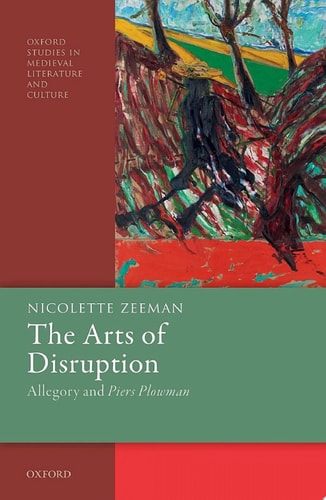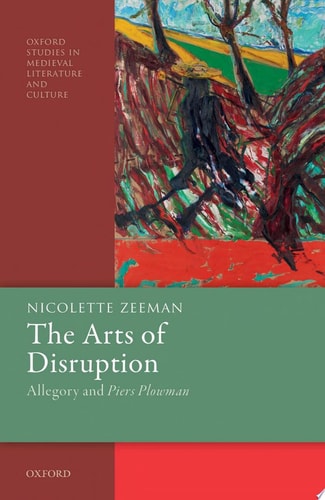
The Arts of Disruption: Allegory and Piers Plowman
0
0
As an Amazon Associate and affiliate partner, Menrva Books earns from qualifying purchases. Learn more
Author Description
The Arts Of Disruption: Allegory And Piers Plowman Offers A Series Of New Readings Of The Allegorical Poem Piers Plowman: But It Is Also A Book About Allegory. It Argues Not Just That There Are Distinctively Disruptive 'arts' That Occur In Allegory, But That Allegory, Because It Is Interested In The Difficulty Of Making Meaning, Is Itself A Disruptive Art. The Book Approaches This Topic Via The Study Of Five Medieval Allegorical Narrative Structures That Exploit Diegetic Conflict And Disruption. Although Very Different, They All Bring Together Contrasting Descriptions Of Spiritual Process, In Order To Develop New Understanding And Excite Moral Or Devotional Change. These Five Structures Are: The Paradiastolic 'hypocritical Figure' (such As Vices Masked By Being Made To Look Like 'adjacent' Virtues), Personification Debate, Violent Language And Gestures Of Apophasis, Narratives Of Bodily Decline, And Grail Romance. Each Appears In A Range Of Texts, Which The Book Explores, Along With Other Connected Materials In Medieval Rhetoric, Logic, Grammar, Spiritual Thought.
Menrva's Summary
THE THESIS
This work investigates whether allegory functions as a fundamentally disruptive art form by examining the inherent difficulties of meaning-making within medieval narrative structures. Nicolette Zeeman, a scholar of medieval literature, utilizes a rigorous analytical framework to argue that allegory is not merely a literary device but a mechanism for provoking moral and devotional change. By analyzing the intersection of rhetoric, logic, and theology, the author demonstrates how medieval texts intentionally exploit conflict to challenge the reader's interpretive process.
THE SCOPE MAP
What You Will Find
- Analysis of five specific allegorical structures: paradiastolic figures, personification debate, apophasis, bodily decline, and Grail romance.
- Examination of Piers Plowman alongside broader medieval rhetorical and grammatical traditions.
- Exploration of how diegetic conflict serves to disrupt traditional spiritual and intellectual understanding.
Scope Limits
- The study focuses primarily on medieval allegorical structures and does not provide a comprehensive history of all medieval literary forms.
- The analysis is restricted to the specific narrative mechanisms identified by the author rather than an exhaustive survey of every extant medieval manuscript.
THE AUTHORITY PERSPECTIVE
Scholars in the field of medieval studies recognize this text as a significant contribution to the understanding of allegorical theory and the complexities of medieval narrative. Readers frequently note the academic density of the prose, which is intended for an audience familiar with medieval rhetoric and theological history.
Page Count:
448
Publication Date:
2020-01-01
Publisher:
Oxford University Press
ISBN-10:
0192604090
ISBN-13:
9780192604095
Philosophy
Literary Criticism
Rhetoric
Allegory
Medieval