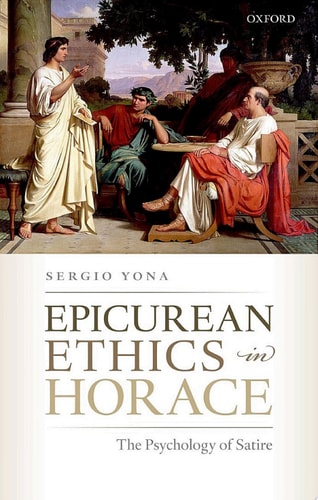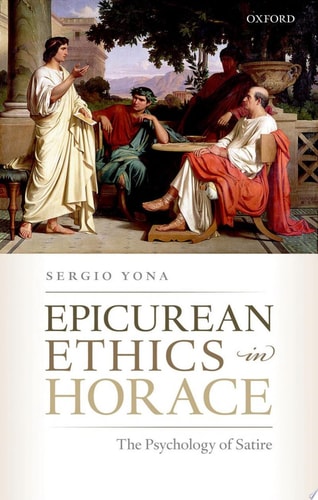
Epicurean Ethics in Horace: The Psychology of Satire
0
0
As an Amazon Associate and affiliate partner, Menrva Books earns from qualifying purchases. Learn more
Author Description
Over The Centuries Leading Up To Their Composition Many Genres And Authors Have Emerged As Influences On Horace's Satires, Which In Turn Has Led To A Wide Variety Of Scholarly Interpretations. This Study Aims To Expand The Existing Dialogue By Exploring Further The Intersection Of Ancient Satire And Ethics, Focusing On The Moral Tradition Of Epicureanism Through The Lens Of One Source In Particular: Philodemus Of Gadara. An Epicurean Philosopher Who Wrote For A Roman Audience And Was One Of Horace's Contemporaries And Neighbours In Italy, Philodemus' Works, Which Were Preserved By The Eruption Of Vesuvius In Ad 79 But Have Nevertheless Not Been Widely Read On Account Of Their Fragmentary Nature, Offer A Range Of Ethical Treatises On Subjects Including Patronage, Friendship, Flattery, Frankness, Poverty, And Wealth. Epicurean Ethics In Horace: The Psychology Of Satire Offers A Serious Consideration Of The Role Of Philodemus' Epicurean Teachings In Horace's Satires And Argues That The Central Concerns Of The Philosopher's Work Not Only Lie At The Heart Of The Poet's Criticisms Of Roman Society And Its Shortcomings, But Also Lend To The Collection A Certain Coherence And Overall Unity In Its Underlying Convictions. The Result Is An Illuminating Examination Of The Deep And Pervasive Influence Of This Moral Tradition On The Satiric Poetry Of One Of The Most Acclaimed And Beloved Roman Lyricists, Which Also Manages To Reveal, To A Degree, Something Of The Poet Behind The Literary Mask Or Persona Through Its Elucidation Of The Philosophically Consistent Nature Of Horace's Self-representation In These Poems.
Menrva's Summary
THE THESIS
This study investigates the extent to which the Epicurean philosophical teachings of Philodemus of Gadara inform the moral framework and thematic unity of Horace's Satires. Sergio Yona, a scholar of classical literature, utilizes a comparative analysis of Philodemus' fragmentary ethical treatises and Horace's poetic output to argue that Epicureanism provides a consistent intellectual foundation for the poet's social critiques. By examining the intersection of Roman satire and Hellenistic philosophy, the author posits that these teachings offer a coherent structure to Horace's self-representation and his observations on Roman societal values.
THE SCOPE MAP
What You Will Find
- Comparative analysis of Philodemus of Gadara's ethical treatises and Horace's Satires
- Exploration of themes including patronage, friendship, flattery, frankness, poverty, and wealth
- Examination of the philosophical consistency within Horace's literary persona
Scope Limits
- Does not provide a comprehensive biography of Horace beyond his philosophical self-representation
- Focuses primarily on the influence of Philodemus rather than other potential philosophical influences on Horace
THE AUTHORITY PERSPECTIVE
Scholars in the field of classical studies recognize this work as a significant contribution to the understanding of the philosophical underpinnings of Augustan poetry. Readers frequently note the academic density of the prose, which is tailored for those with a background in Latin literature and ancient philosophy.
Page Count:
343
Publication Date:
2018-01-01
Publisher:
Oxford University Press
ISBN-10:
0191090123
ISBN-13:
9780191090127
Philosophy
Epicureanism
Literary Criticism