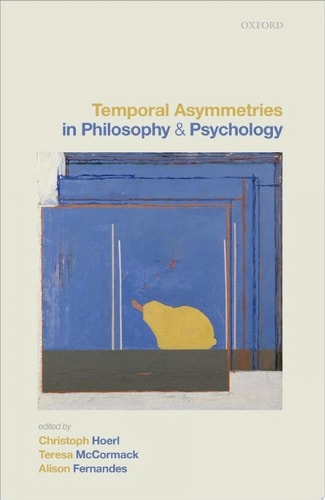
Temporal Asymmetries in Philosophy and Psychology
0
0
As an Amazon Associate and affiliate partner, Menrva Books earns from qualifying purchases. Learn more
Author Description
Humans' attitudes towards an event often vary depending on whether the event has already happened or has yet to take place. The dread felt at the thought of a forthcoming exam turns into relief once it is over. Recent research in psychology also shows that people value past events less than future ones, such as offering less pay for work already carried out than for the same work to be carried out in the future. This volume brings together philosophers and psychologists with a shared interest in such psychological past/future asymmetries. It asks questions such as: What different kinds of psychological past/future asymmetries are there, and how are they related? Under what conditions do humans exhibit them? To what extent do they reflect features of time itself, or particular beliefs people have about time? Are they rational, or at least rationally permissible, or should we aspire to being temporally neutral? What exactly does temporal neutrality consist of?
Menrva's Summary
THE THESIS
This volume investigates the cognitive and philosophical foundations of temporal asymmetries, specifically why human attitudes toward events differ based on their position in the past or future. Editor Barbara Herman compiles interdisciplinary research to examine whether these biases are rational, how they manifest in human behavior, and whether temporal neutrality is a viable normative goal for human cognition.
THE SCOPE MAP
What You Will Find
- Comparative analysis of psychological studies regarding past versus future valuation
- Philosophical frameworks for evaluating the rationality of temporal bias
- Theoretical inquiries into the nature of time and human perception
Scope Limits
- Does not provide a comprehensive clinical guide for overcoming temporal bias
- Does not focus on historical or sociological perspectives of time
THE AUTHORITY PERSPECTIVE
Experts identify this collection as a specialized resource for those interested in the intersection of cognitive psychology and analytic philosophy. Readers frequently note the academic density of the prose, which is intended for scholars and advanced students in the field.
Page Count:
314
Publication Date:
2022-01-01
Publisher:
OUP Oxford
ISBN-10:
0192607847
ISBN-13:
9780192607843
Psychology
Philosophy
Behavioral Science
Metaphysics
Community Tags
Similar Books