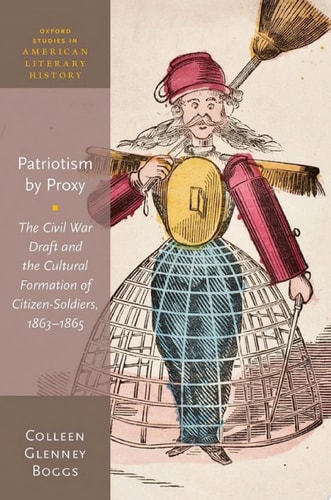
Patriotism by Proxy: The Civil War Draft and the Cultural Formation of Citizen-Soldiers, 1863-1865
0
0
As an Amazon Associate and affiliate partner, Menrva Books earns from qualifying purchases. Learn more
Author Description
At the height of the Civil War in 1863, the Union instated the first-ever federal draft. Patriotism By Proxy develops a new understanding of the connections between American literature and American lives by focusing on this historic moment when the military transformed both. Paired with the Emancipation Proclamation, the 1863 draft inaugurated new relationships between the nation and its citizens. A massive bureaucratic undertaking, it redefined the American people as a population, laying bare social divisions as wealthy draftees hired substitutes to serve in their stead. The draft is the context in which American politics met and also transformed into a new kind of biopolitics, and these substitutes reflect the transformation of how the state governed American life. Censorship and the suspension of habeas corpus prohibited free discussions over the draft's significance, making literary devices and genres the primary means for deliberating over the changing meanings of political representation and citizenship. Assembling an extensive textual and visual archive, Patriotism by Proxy examines the draft as a cultural formation that operated at the nexus of political abstraction and embodied specificity, where the definition of national subjectivity was negotiated in the interstices of what it means to be a citizen-soldier. It brings together novels, poems, letters, and newspaper editorials that show how Americans discussed the draft at a time of censorship, and how the federal draft changed the way that Americans related to the state and to each other.
Menrva's Summary
THE THESIS
This book investigates how the 1863 Union draft transformed the relationship between the American state and its citizens by establishing a new framework of biopolitics. Colleen G. Boggs, a scholar of American literary history, utilizes a diverse archive of mid-19th-century texts to argue that the draft served as a catalyst for redefining national subjectivity. By examining the practice of hiring substitutes, the author demonstrates how political representation and citizenship were negotiated through literary and cultural mediums during a period of intense state censorship.
THE SCOPE MAP
What You Will Find
- Analysis of the 1863 federal draft as a bureaucratic and cultural mechanism.
- Examination of the substitute system and its impact on social stratification.
- Integration of novels, poetry, personal letters, and newspaper editorials from the Civil War era.
- Theoretical application of biopolitics to 19th-century American governance.
Scope Limits
- The study focuses primarily on the Union perspective and does not provide a comparative analysis of Confederate conscription policies.
- The text prioritizes literary and cultural discourse over a comprehensive military history of the draft's logistical implementation.
THE AUTHORITY PERSPECTIVE
Scholars in the field of American literary history recognize this work as a significant contribution to the study of how political crises shape cultural production. Readers frequently note the academic density of the prose and the author's ability to synthesize complex political theory with historical archival research.
Page Count:
192
Publication Date:
2020-01-01
Publisher:
OUP Oxford
ISBN-10:
019260905X
ISBN-13:
9780192609052
History
Civil War
19th Century
Indigenous
United States
Literary Criticism
Community Tags
Similar Books