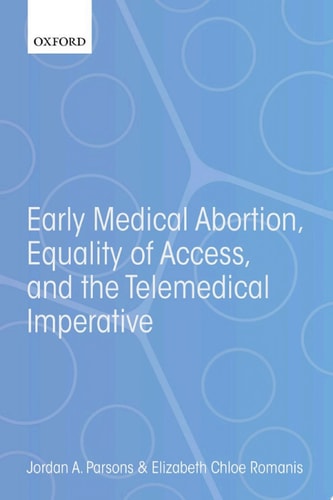
Early Medical Abortion, Equality of Access, and the Telemedical Imperative
0
0
As an Amazon Associate and affiliate partner, Menrva Books earns from qualifying purchases. Learn more
Author Description
Telemedicine has recently become a key focus of healthcare systems globally, heavily influenced by the COVID-19 pandemic and the increased need for remote care pathways. Implementing telemedicine can bring myriad benefits for both patients and providers, and has the potential to make a huge impact by improving access to abortion care. In both the United Kingdom and United States, abortion is heavily regulated—exceptionally so when compared to other routine healthcare. This regulation has had the impact of exacerbating the social and geographical circumstances that can make access to abortion services difficult. This book examines telemedical provision of early medical abortion, alongside the access barriers created by laws in the United Kingdom and United States. It critically appraises a series of developments in this rapidly evolving subject, providing an up-to-date and well-informed analysis. In doing so, it argues that there is a moral imperative to introduce, retain, or reinstate (as applicable) telemedical early medical abortion.
Menrva's Summary
THE THESIS
This book investigates the moral and legal necessity of integrating telemedical services into early medical abortion care to mitigate systemic barriers to access. The authors, Jordan A. Parsons and Elizabeth Chloe Romanis, utilize a comparative legal framework to analyze the regulatory environments of the United Kingdom and the United States. By synthesizing current healthcare policy developments with ethical arguments, they posit that remote care pathways are not merely a convenience but a requirement for equitable reproductive healthcare.
THE SCOPE MAP
What You Will Find
- Comparative analysis of abortion regulation in the UK and US
- Evaluation of telemedical service implementation post-COVID-19
- Ethical arguments regarding the moral imperative of remote care
Scope Limits
- Does not provide clinical medical instructions for performing abortions
- Does not cover the full spectrum of surgical abortion procedures
THE AUTHORITY PERSPECTIVE
Experts identify this work as a significant contribution to the intersection of medical law and reproductive health policy. Readers frequently note the academic rigor and the clarity with which the authors navigate complex, politically sensitive regulatory landscapes.
Page Count:
237
Publication Date:
2021-01-01
Publisher:
OUP Oxford
ISBN-10:
019264985X
ISBN-13:
9780192649850
Public Health
Medical Law
Sociology of Medicine
Telemedicine
Allied Health
Reproductive Rights
Medical
Community Tags
Similar Books