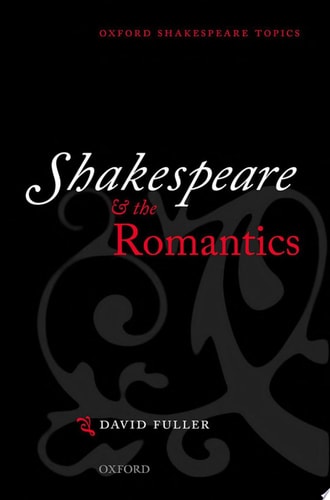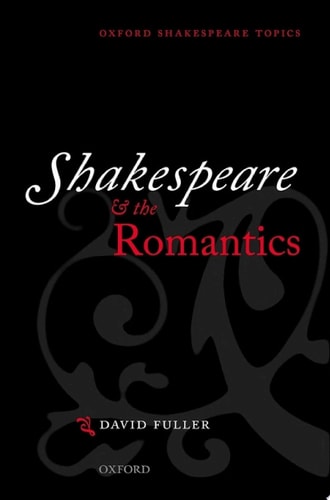
Shakespeare and the Romantics
0
0
As an Amazon Associate and affiliate partner, Menrva Books earns from qualifying purchases. Learn more
Author Description
Romantic criticism, of which Shakespeare is the central figure, invented many of the modes of modern criticism. It is also distinct from many contemporary academic norms. Engaged with the social and intellectual currents of an age of revolutionary change, it is experimental, writerly, and individually expressive. Above all it is creative in response to the difficulties of understanding aesthetic experience in new ways, and in setting those experiences in new cultural and political contexts that Shakespeare's work helped to shape. This book presents the main currents of these exciting but relatively little known engagements with Shakespeare, and through Shakespeare with the theory and practice of criticism, in England, Germany, and France, from the 1760s in Germany to the aftermath of the Romanticism in France. It also discusses Shakespeare in the theatre of the period--realist stagings which prefigure Shakespeare films; adaptations which fitted Shakespeare to contemporary tastes; and bare-stage experiments which foreshadow modes of contemporary theatre. A chapter on scholarship in the period shows Shakespeare as central to modern editing and historical criticism. Much of the writing discussed is by men and women whose focus is not primarily critical but creative--poetry (Coleridge, Keats, Heine), fiction (Stendhal), drama (Lessing), or all three (Goethe, Hugo), cultural critique (Jameson, de Staël), philosophy (Hamann, Herder), politics (Hazlitt, Guizot), aesthetics (the Schlegel circle), or new original work in other media (Berlioz, Delacroix, Chassériau). It is writing directed to new modes of creating as well as new modes of understanding.
Menrva's Summary
THE THESIS
This book investigates how Romantic-era critics and creative figures utilized Shakespeare as a central pillar to invent modern modes of criticism and aesthetic theory. David Fuller, an established scholar in the field, examines the intersection of Shakespearean reception with the social and political upheavals of the late 18th and 19th centuries. He argues that Romantic engagement with Shakespeare was not merely academic but a creative, experimental process that shaped cultural identity across England, Germany, and France.
THE SCOPE MAP
What You Will Find
- Analysis of Shakespearean reception in England, Germany, and France from the 1760s through the mid-19th century.
- Examination of diverse creative responses including poetry, drama, philosophy, and visual arts.
- Discussion of theatrical practices, ranging from realist stagings to early experimental adaptations.
- Overview of the evolution of Shakespearean scholarship and editorial practices.
Scope Limits
- The text does not provide a comprehensive biography of Shakespeare himself.
- It does not cover post-Romantic or modern 20th-century critical theories in depth.
THE AUTHORITY PERSPECTIVE
Experts recognize this work as a valuable synthesis of cross-cultural Shakespearean reception during a pivotal historical period. Readers frequently note the academic density of the prose, which assumes a foundational knowledge of both Romantic literature and Shakespearean drama.
Page Count:
289
Publication Date:
2021-01-01
Publisher:
OUP Oxford
ISBN-10:
019264839X
ISBN-13:
9780192648396
Humanities
Special Topics
Theater History
Aesthetics
Literary Criticism
European History
Romanticism
Theatre