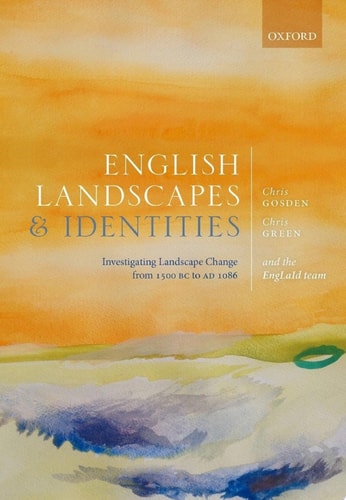
English Landscapes and Identities: Investigating Landscape Change from 1500 BC to AD 1086
0
0
As an Amazon Associate and affiliate partner, Menrva Books earns from qualifying purchases. Learn more
Author Description
Long before the Norman Conquest of 1066, England saw periods of profound change that transformed the landscape and the identities of those who occupied it. The Bronze and Iron Ages saw the introduction of now-familiar animals and plants, such as sheep, horses, wheat, and oats, as well as new forms of production and exchange and the first laying out of substantial fields and trackways, which continued into the earliest Romano-British landscapes. The Anglo-Saxon period saw the creation of new villages based around church and manor, with ridge and furrow cultivation strips still preserved today. The basis for this volume is The English Landscapes and Identities project, which synthesised all the major available sources of information on English archaeology to examine this crucial period of landscape history from the middle Bronze Age (c. 1500 BC) to the Domesday survey (c. 1086 AD). It looks at the nature of archaeological work undertaken across England to assess its strengths and weaknesses when writing long-term histories. Among many other topics it examines the interaction of ecology and human action in shaping the landscape; issues of movement across the landscape in various periods; changing forms of food over time; an understanding of spatial scale; and questions of enclosing and naming the landscape, culminating in a discussion of the links between landscape and identity. The result is the first comprehensive account of the English landscape over a crucial 2500-year period. It also offers a celebration of many centuries of archaeological work, especially the intensive large-scale investigations that have taken place since the 1960s and transformed our understanding of England's past.
Menrva's Summary
THE THESIS
How did the English landscape and the identities of its inhabitants evolve through the complex interplay of human activity and ecological change between 1500 BC and AD 1086? This volume presents the findings of the English Landscapes and Identities project, a collaborative effort by a team of archaeologists led by Anwen Cooper and Chris Gosden. By synthesizing extensive archaeological data, the authors examine the long-term transformation of the English countryside, focusing on how agricultural practices, settlement patterns, and social structures shaped the environment over two and a half millennia. The work provides a critical assessment of archaeological methodologies and the limitations of historical data in constructing long-term narratives.
THE SCOPE MAP
What You Will Find
- Analysis of landscape evolution from the middle Bronze Age to the Domesday survey.
- Examination of human-ecology interactions, including food production and land enclosure.
- Evaluation of archaeological research practices and data quality in England since the 1960s.
Scope Limits
- The study is geographically restricted to England.
- The analysis concludes at the Domesday survey (AD 1086) and does not extend into the medieval or post-medieval periods.
THE AUTHORITY PERSPECTIVE
Experts recognize this volume as a significant synthesis of large-scale archaeological data, providing a foundational framework for understanding the deep history of the English landscape. Readers frequently note the academic density of the prose, which is intended for professional archaeologists and historians specializing in British landscape studies.
Page Count:
496
Publication Date:
2021-01-01
Publisher:
OUP Oxford
ISBN-10:
0192643606
ISBN-13:
9780192643605
History
Archaeology
Landscape History
Social History
British History
Community Tags
Similar Books


Reader Comments
Share Your Thoughts
No comments yet. Be the first to share your thoughts!