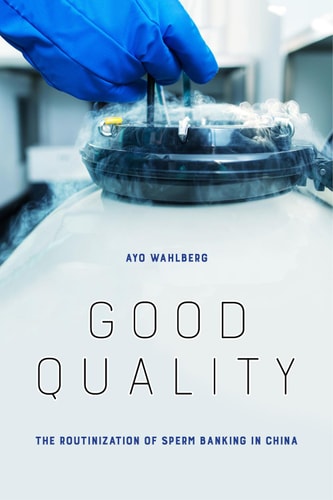
Good Quality
0
0
As an Amazon Associate and affiliate partner, Menrva Books earns from qualifying purchases. Learn more
Author Description
From its crude and uneasy beginnings thirty years ago, Chinese sperm banking has become a routine part of China’s pervasive and restrictive reproductive complex. Today, there are sperm banks in each of China’s twenty-two provinces, the biggest of which screen some three thousand to four thousand potential donors each year. Given the estimated one to two million azoospermic men--those who are unable to produce their own sperm--the demand remains insatiable. China’s twenty-two sperm banks cannot keep up, spurring sperm bank directors to publicly lament chronic shortages and even warn of a national ‘sperm crisis’ (jingzi weiji). Good Quality explores the issues behind the crisis, including declining sperm quality in the country due to environmental pollution, as well as a chronic national shortage of donors. In doing so, Wahlberg outlines the specific style of Chinese sperm banking that has emerged, shaped by the particular cultural, juridical, economic and social configurations that make up China’s restrictive reproductive complex. Good Quality shows how this high-throughput style shapes the ways in which men experience donation and how sperm is made available to couples who can afford it.
Menrva's Summary
THE THESIS
China's pervasive and restrictive reproductive complex is underscored by an insatiable demand for sperm, a demand that its twenty-two provincial sperm banks struggle to meet. The book explores the critical issues behind this 'sperm crisis,' including declining sperm quality attributed to environmental pollution and a chronic shortage of donors, which has led directors to publicly lament the situation. Wahlberg details the unique style of Chinese sperm banking, shaped by specific cultural, juridical, economic, and social configurations within this complex. The work further examines how this high-throughput system influences men's experiences of donation and the accessibility of sperm for couples who can afford it.
THE SCOPE MAP
- The evolution of Chinese sperm banking over the past thirty years.
- The scale of operations: sperm banks in twenty-two provinces and donor screening numbers.
- The estimated one to two million azoospermic men and the resulting insatiable demand.
- The concept of a national 'sperm crisis' (jingzi weiji).
- Factors contributing to declining sperm quality, specifically environmental pollution.
- The chronic national shortage of sperm donors.
- The specific style of Chinese sperm banking and its defining characteristics.
- The influence of cultural, juridical, economic, and social configurations on reproductive practices.
THE AUTHORITY PERSPECTIVE
The book examines the complex socio-medical landscape of sperm banking in China, highlighting the challenges posed by declining sperm quality and donor shortages. It details how the specific cultural and economic context shapes both the donor experience and the availability of sperm for prospective parents. The analysis focuses on the unique 'high-throughput' model that has emerged within China's restrictive reproductive system. This work provides insight into the intricate interplay of public health, ethics, and societal pressures within contemporary China.
Page Count:
248
Publication Date:
2018-04-03
Publisher:
University of California Press
ISBN-10:
0520969995
ISBN-13:
9780520969995
Science
Non-Fiction
Art
China Studies
Medical Ethics
Sociology
Public Health
Reproductive health
Community Tags
Similar Books