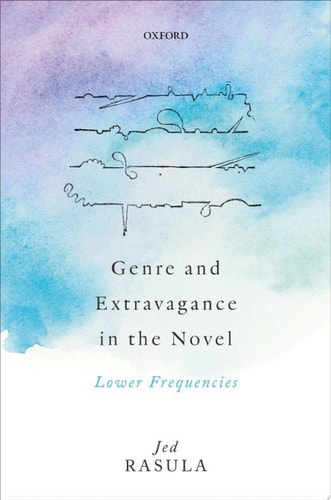
Genre and Extravagance in the Novel: Lower Frequencies
0
0
As an Amazon Associate and affiliate partner, Menrva Books earns from qualifying purchases. Learn more
Author Description
This book addresses an anomaly in the novel as genre: the generic promise to readers--that "reading a novel" is a familiar and repeatable experience--is challenged by the extravagant exceptions to this rule. Furthermore, these exceptions (such as Moby-Dick, Ulysses, or To the Lighthouse) are sui generis, hybrid concoctions that cannot be said to be typical novels. The novel, then, as literary form, succeeds by extravagantly disregarding or even disavowing the protocols of its own genre. Examining a number of famous examples from Don Quixote to Nostromo, this book offers an anatomy of exceptions that illustrate the structural role of their exceptionality for the prestige of the novel as literary form.
Menrva's Summary
THE THESIS
This book investigates the paradox of the novel as a genre that derives its prestige and structural integrity from its most extravagant and atypical exceptions. Jed Rasula, a scholar of modernism and literary history, utilizes a comparative framework to analyze how canonical works that defy standard generic conventions actually serve to define the boundaries and possibilities of the novel form. By examining the tension between the familiar promise of the novel and the radical departures found in specific masterpieces, the author argues that these anomalies are not failures of the genre but are instead essential to its evolution and cultural status.
THE SCOPE MAP
What You Will Find
- A theoretical analysis of generic conventions versus literary innovation
- Case studies of canonical works including Don Quixote, Moby-Dick, Ulysses, To the Lighthouse, and Nostromo
- An examination of the structural role of hybridity and formal experimentation
Scope Limits
- The text does not provide an exhaustive history of the novel form
- It does not focus on contemporary or genre-fiction trends outside the established literary canon
THE AUTHORITY PERSPECTIVE
Scholars and critics recognize this work as a sophisticated contribution to literary theory that challenges traditional taxonomies of the novel. Readers frequently note the academic density of the prose, which is intended for an audience familiar with formalist and structuralist critical discourse.
Page Count:
256
Publication Date:
2021-01-01
Publisher:
OUP Oxford
ISBN-10:
0192652478
ISBN-13:
9780192652478
Non-Fiction
Criticism history
Literary Form
Literary Criticism
History of the Novel
English & College Success
English
Literary theory
Community Tags
Similar Books