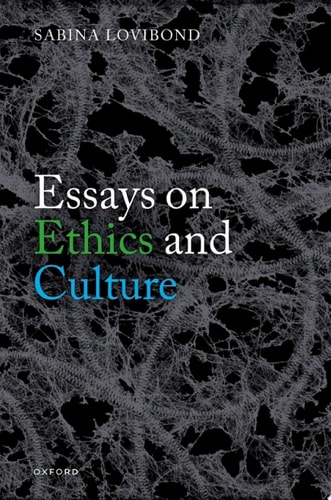
Essays on Ethics and Culture
0
0
As an Amazon Associate and affiliate partner, Menrva Books earns from qualifying purchases. Learn more
Author Description
These essays discuss various ontological and epistemological questions in moral philosophy, drawing on ideas from Platonic-Aristotelian ethics, the later Wittgenstein, and Iris Murdoch, though without seeking to weave these into any unified system. The general approach is realist or objectivist, paying some attention to the role of imaginative literature (especially the novel) in ethical formation. A common theme is the lived experience of the socially situated subject, including our capacity for engagement with the values present in an inherited tradition or 'form of life'. Such engagement, once raised to consciousness, may contain elements both of affirmation and of cultural critique. In the book as a whole, the critical theme predominates, with a certain emphasis on discourses of social disruption. But it is always assumed that the right place to stand as an observer of the domain of value is within that domain, and that moral critique will be immanent with respect to the culture addressed—that is, it will make do with just the conceptual and linguistic resources available to ordinary participants in moral, political, or aesthetic conversation.
Menrva's Summary
THE THESIS
This collection investigates the intersection of moral philosophy, cultural tradition, and the epistemological status of ethical values. Sabina Lovibond, a scholar of moral philosophy, utilizes a realist and objectivist framework to examine how individuals engage with inherited moral traditions. By drawing on the works of Plato, Aristotle, the later Wittgenstein, and Iris Murdoch, the author argues that moral critique must remain immanent, utilizing the existing linguistic and conceptual resources available to participants within a culture.
THE SCOPE MAP
What You Will Find
- Analysis of moral realism and objectivism in ethical discourse
- Examination of the role of literature and the novel in ethical formation
- Discussion of the socially situated subject within a 'form of life'
- Critique of social disruption and cultural norms
Scope Limits
- Does not attempt to synthesize the cited philosophical traditions into a single, unified system
- Focuses on immanent critique rather than proposing a new, external moral framework
THE AUTHORITY PERSPECTIVE
Scholars and students of moral philosophy frequently identify this work as a nuanced contribution to the debate between realism and cultural relativism. Readers often note the academic density of the prose, which requires familiarity with Wittgensteinian and Aristotelian concepts to fully grasp the author's arguments.
Page Count:
265
Publication Date:
2022-01-01
Publisher:
OUP Oxford
ISBN-10:
0192668854
ISBN-13:
9780192668851
Philosophy
Epistemology
Moral Philosophy
Ontology
Fairy Tales
Ethics