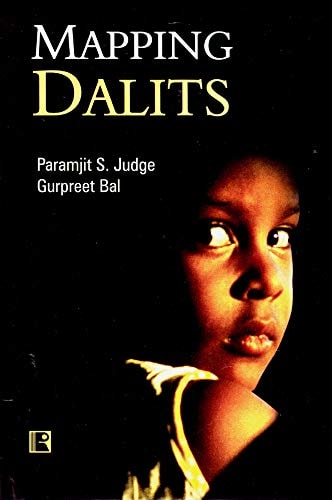
Mapping Dalits: Contemporary Reality and Future Prospects in Punjab
0
0
As an Amazon Associate and affiliate partner, Menrva Books earns from qualifying purchases. Learn more
Author Description
In comparison to other Indian states, Punjab is often considered free from acute caste-based inequalities and atrocities, even though the caste system exists and prevails in the structure of everyday life of the Punjabis. It has been argued that certain visible changes have occurred among the dalits, a marginalized group in Indian society. But, not all the castes among the dalits have been able to transform their social and economic conditions that could have altered their self-perception, as well as their status. More mobile castes, particularly the Ad-dharmis, have constructed their own distinct and insulated world in which the dalit and self have become coterminous. Urban dalits have undergone rapid change in their conditions, which they have transformed into political empowerment at the local level. Despite the changes however, there are certain aspects of their social life which have not undergone change. Much of this is related to the consciousness of the dalits. The existence and belief in the caste hierarchy could be gauged by the fact that they still predominantly favor caste endogamy. Moreover, the manifest emphasis on caste identity under the overarching influence of the politics of the Bahujan Samaj Party has created conditions where the realization of the goal to end the caste system appears to be a remote possibility. Based on an empirical investigation of rural and urban Punjab, India, this book explores the social mobility patterns of the dalits. Four dimensions - education, empowerment, emigration, and entrepreneurship - have been examined to map the changing character of the dalits.
Menrva's Summary
THE THESIS
This book investigates the complex realities and future trajectories of Dalits in Punjab, a region often perceived as less caste-bound than other Indian states, yet where caste deeply influences daily life. Despite visible changes and advancements among Dalits, particularly in urban areas leading to political empowerment, not all sub-castes have achieved significant social and economic transformation. The study examines four key dimensions—education, empowerment, emigration, and entrepreneurship—to map the evolving character of Dalit communities in both rural and urban Punjab, revealing persistent aspects of social life tied to caste consciousness, such as endogamy, and the impact of caste-centric politics on the goal of caste eradication.
THE SCOPE MAP
- Analysis of social mobility patterns among Dalit communities in Punjab.
- Examination of the role of education in Dalit social transformation.
- Exploration of empowerment initiatives and their impact on Dalits.
- Investigation into emigration trends among Dalits and their consequences.
- Assessment of entrepreneurship as a driver of economic change for Dalits.
- Discussion of the persistence of caste endogamy and its implications.
- Analysis of the influence of Bahujan Samaj Party politics on Dalit identity and caste abolition goals.
- Empirical investigation based on data from rural and urban Punjab.
THE AUTHORITY PERSPECTIVE
This book offers a detailed empirical investigation into the social mobility of Dalits in Punjab, a region with a nuanced relationship with caste. The study's focus on education, empowerment, emigration, and entrepreneurship provides a multi-dimensional view of contemporary Dalit realities. It highlights both the advancements made by certain Dalit groups, particularly in urban settings, and the persistent challenges that hinder the complete eradication of the caste system. The analysis suggests that while visible changes have occurred, deep-seated caste consciousness and political dynamics continue to shape Dalit prospects.
Page Count:
234
Publication Date:
2009-01-01
Publisher:
Rawat Publications
ISBN-10:
8131602680
ISBN-13:
9788131602683
Non-Fiction
History
Politics
Empowerment
Sociology
Dalit Studies
Community Tags
Similar Books