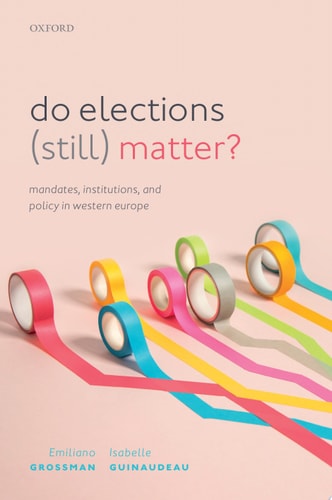
Do Elections (Still) Matter?
0
0
As an Amazon Associate and affiliate partner, Menrva Books earns from qualifying purchases. Learn more
Author Description
The Critique Of Liberal Democracy Has Focused Mostly On The Same Issues Since The 19th Century. Liberal Democracy Is Denounced As An Elitist Project That Deprives The Vast Majority Of The People Of Any Meaningful Form Of Participation. Elites, Once Elected, Will Primarily Respond To Economic Interests Or Serve Themselves, Rather Than Represent Voters. Elites Become Increasingly Disconnected From The Rest Of Society And Access To The Sphere Of Political Elites Will Become Increasingly Difficult Over Time. In The Context Of Globalization, They Are Moreover Less And Less Connected To Their Countries Of Origin. The Electoral Supply Is Growing Increasingly Similar, Thereby Limiting Effective Choice For Voters. Political Elites, The Media And Scholars Have Voiced Increasing Concern About The Shrinking Leeway For Elected Governments To Actively Shape Policies In Times Of Growing International Interdependence, Regional Integration, Budget Pressures And Political Polarization (boix, 2000; Mair, 2008). Nobel Laureate Joseph Stiglitz, Recently Expressed Concern About The Fact That Europe Had Drawn Up Rules That People In The Member States Through Elections No Longer Can Change And That Voters Could Not Anymore Influence Economic Policy By Casting Their Vote. Against This Background, Electoral Promises Are Essentially Cheap Talk Designed Above All To Win The Election And Then Quickly Forgotten. In Most Democracies, Opinion Polls Reveal A Climate Of Generalized And Growing Scepticism Towards Parties And Their Promises. Party Programs Are Often Presented As A Mere Instrument Of Communication. In France, For Example, One Recent Survey Reveals That Broken Electoral Promises Are Among The Reasons That Are Most Cited By Interviewees For Loss Of Confidence In The Executive. A Non-trivial Number Of Citizens And Political Actors In Virtually All Contemporary Democracies Shares Parts Or All Of This Non-exhaustive List Of Critiques. Many Political Challengers, Especially On The Far Right,
Menrva's Summary
THE THESIS
This book investigates whether democratic elections still provide citizens with a meaningful mechanism to influence government policy and hold political elites accountable. The authors, Emiliano Grossman and Isabelle Guinaudeau, utilize extensive empirical data and comparative political analysis to address the growing skepticism surrounding representative democracy. They examine the disconnect between electoral promises and actual policy outcomes, testing the validity of claims that globalization and international integration have rendered national elections ineffective.
THE SCOPE MAP
What You Will Find
- Comparative analysis of electoral manifestos and subsequent government policy implementation.
- Quantitative assessment of party program consistency across multiple democratic nations.
- Evaluation of the impact of international constraints and economic pressures on national policy-making.
Scope Limits
- The study focuses primarily on established Western democracies and may not account for emerging or non-liberal political systems.
- It does not provide a comprehensive history of democratic theory, focusing instead on contemporary electoral mechanics.
THE AUTHORITY PERSPECTIVE
Scholars in the field of political science view this work as a rigorous empirical contribution to the debate on democratic representation. Readers frequently note the academic density of the prose, which is tailored for researchers and students of comparative politics.
Page Count:
0
Publication Date:
2021-01-01
Publisher:
Oxford, United Kingdom ; Oxford University Press,
ISBN-10:
0192662953
ISBN-13:
9780192662958
Sociology
Elections
Government
Public Policy
Democracy
Community Tags
Similar Books