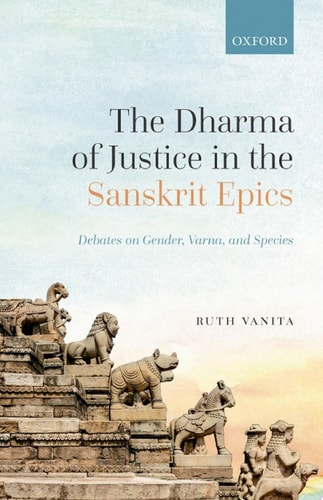
The Dharma of Justice in the Sanskrit Epics: Debates on Gender, Varna, and Species
0
0
As an Amazon Associate and affiliate partner, Menrva Books earns from qualifying purchases. Learn more
Author Description
This book shows that many characters in the Sanskrit epics - men and women of all varnas and mixed-varna - discuss and criticize discrimination based on gender, varna, poverty, age, and disability. On the basis of philosophy, logic and devotion, these characters argue that such categories are ever-changing, mixed and ultimately unreal therefore humans should be judged on the basis of their actions, not birth. The book explores the dharmas of singleness, friendship, marriage, parenting, and ruling. Bhakta poets such as Kabir, Tulsidas, Rahim and Raidas drew on ideas and characters from the epics to present a vision of oneness. Justice is indivisible, all bodies are made of the same matter, all beings suffer, and all consciousnesses are akin. This book makes the radical argument that in the epics, kindness to animals, the dharma available to all, is inseparable from all other forms of dharma.
Menrva's Summary
THE THESIS
This book investigates how characters within the Sanskrit epics challenge systemic discrimination based on gender, caste, and species through philosophical and logical debate. Ruth Vanita, a scholar of Indian literature and gender studies, utilizes close readings of the Mahabharata and Ramayana to demonstrate that these texts contain internal critiques of social hierarchy. She argues that the epics promote a vision of justice rooted in the belief that human worth is determined by individual action rather than birth, emphasizing the interconnectedness of all living beings.
THE SCOPE MAP
What You Will Find
- Analysis of debates concerning varna, gender, and disability within the Sanskrit epics
- Examination of the philosophical arguments regarding the fluidity of social categories
- Exploration of the influence of epic characters on later Bhakta poets such as Kabir and Tulsidas
- Discussion of the ethical treatment of animals as a component of universal dharma
Scope Limits
- The text focuses primarily on the Sanskrit epics and their reception in Bhakti literature rather than a comprehensive history of Indian legal systems
- It does not provide an exhaustive catalog of every minor character's perspective on social hierarchy
THE AUTHORITY PERSPECTIVE
Scholars and readers frequently note the book's ability to reframe traditional epic analysis by highlighting the progressive, egalitarian arguments embedded within ancient texts. Experts often cite this work as a significant contribution to the study of ethics and social justice within classical Indian literature.
Page Count:
426
Publication Date:
2021-01-01
Publisher:
OUP Oxford
ISBN-10:
0192676016
ISBN-13:
9780192676016
Philosophy
Religion
Body Mind Spirit
Indian History
Ethics
Gender Studies
Sanskrit
Community Tags
Similar Books