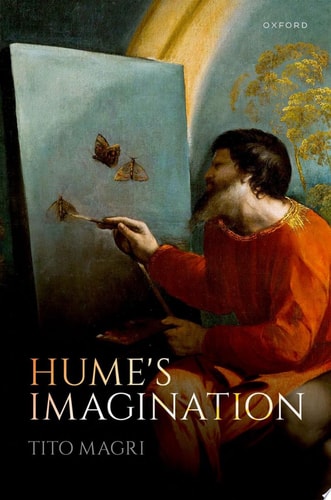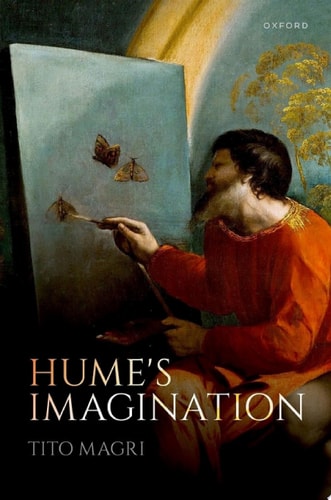
Hume's Imagination
0
0
As an Amazon Associate and affiliate partner, Menrva Books earns from qualifying purchases. Learn more
Author Description
This book proposes a new and systematic interpretation of the mental nature, function and structure, and importance of the imagination in Book 1, 'Of the Understanding', of Hume's Treatise of Human Nature. The proposed interpretation has deeply revisionary implications for Hume's philosophy of mind and for his naturalism, epistemology, and stance to scepticism. The book remedies a surprising blindspot in Hume scholarship and contributes to the current, lively philosophical debate on imagination. Hume's philosophy, if rightly understood, gives suggestions about how to treat imagination as a mental natural kind, its cognitive complexity and variety of functions notwithstanding.Hume's imagination is a faculty of inference and the source of a distinctive kind of idea, which complements our sensible representations of objects. Our cognitive nature, if restricted to the representation of objects and of their relations, would leave ordinary and philosophical cognition seriously underdetermined and expose us to scepticism. Only the non-representational, inferential faculty of the imagination can put in place and vindicate ideas like causation, body, and self, which support our cognitive practices. The book reconstructs how Hume's naturalist inferentialism about the imagination develops this fundamental insight. Its five parts deal with the dualism of representation and inference; the explanation of generality and modality; the production of causal ideas; the production of spatial and temporal content, and the distinction of an external world of bodies and an internal one of selves; and the replacement of the understanding with imagination in the analysis of cognition and in epistemology.
Menrva's Summary
THE THESIS
This book investigates the nature, function, and structural importance of the imagination within David Hume's 'A Treatise of Human Nature', arguing that it serves as a fundamental faculty of inference rather than mere representation. Tito Magri, a scholar of early modern philosophy, utilizes a systematic re-reading of Book 1 of the Treatise to challenge traditional interpretations of Hume's epistemology. The author posits that the imagination acts as the primary mechanism for establishing concepts such as causation, the self, and the external world, thereby providing a robust defense against the skeptical conclusions often associated with Hume's work.
THE SCOPE MAP
What You Will Find
- A detailed analysis of the dualism between representation and inference in Humean thought.
- An examination of how the imagination generates ideas of generality, modality, and causality.
- A reconstruction of the distinction between the internal world of the self and the external world of bodies.
- A framework for understanding the imagination as a mental natural kind.
Scope Limits
- The analysis is strictly confined to Book 1, 'Of the Understanding', of the 'Treatise of Human Nature'.
- The book does not provide a comprehensive survey of Hume's later moral or political philosophy.
THE AUTHORITY PERSPECTIVE
Scholars recognize this work as a significant contribution to Humean studies, specifically for its attempt to rectify a perceived neglect of the imagination's role in his cognitive theory. Readers frequently note the academic density of the prose, which is intended for those already familiar with the technical debates surrounding Hume's naturalism and skepticism.
Page Count:
510
Publication Date:
2022-01-01
Publisher:
OUP Oxford
ISBN-10:
0192679112
ISBN-13:
9780192679116
Philosophy
Metaphysics
Philosophy history
Epistemology