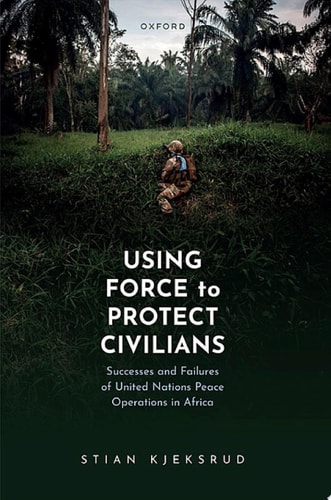
Using Force to Protect Civilians: Successes and Failures of United Nations Peace Operations in Africa
0
0
As an Amazon Associate and affiliate partner, Menrva Books earns from qualifying purchases. Learn more
Author Description
Using Force to Protect Civilians offers the first comprehensive analysis of United Nations military protection operations across time and UN missions, drawing on a novel dataset that covers 200 operations from ten UN peacekeeping missions in Africa from 1999 to 2017. Employing a mixed-methods research design, the book finds that Blue Helmets succeed as often as they fail when they employ force to protect, indicating that they can wield force effectively - under the right conditions - to achieve this priority task. Stian Kjeksrud shows that effective UN military protection operations must rest on a deep understanding of perpetrators' motivation and modus operandi for attacking civilians, facilitating tailored military responses to stop or reduce physical threats in a timely manner. Adding to existing knowledge about the conflict-reducing effect of the presence of uniformed UN personnel, he also finds that specific actions matter more than the simple presence of Blue Helmets in large numbers. While protecting civilians is a priority task for military peacekeepers, we have limited knowledge about how they fare across time and in different UN missions when they use force to protect. We also remain largely ignorant of the conditions leading to successful outcomes when they intervene militarily to protect civilians from violence. Using Force to Protect Civilians addresses both of these knowledge gaps, and provides the building blocks for a theory of the utility of force to protect civilians in UN peace operations.
Menrva's Summary
THE THESIS
This book investigates the conditions under which the use of force by United Nations peacekeepers effectively protects civilians from violence. Stian Kjeksrud, a researcher specializing in military operations, utilizes a comprehensive dataset of 200 operations across ten African missions from 1999 to 2017. By employing a mixed-methods research design, the author argues that the efficacy of military intervention depends less on the sheer number of personnel and more on the specific tactical responses tailored to the motivations and methods of perpetrators.
THE SCOPE MAP
What You Will Find
- A novel dataset covering 200 distinct military protection operations.
- Analysis of ten specific UN peacekeeping missions in Africa between 1999 and 2017.
- A theoretical framework for the utility of force in humanitarian protection contexts.
- Comparative analysis of successful versus failed intervention outcomes.
Scope Limits
- The analysis is geographically restricted to UN missions within the African continent.
- The study focuses primarily on military force rather than diplomatic or civilian-led protection strategies.
THE AUTHORITY PERSPECTIVE
Experts identify this work as a significant contribution to the study of peacekeeping efficacy, noting its rigorous empirical approach to a previously under-researched area. Readers frequently highlight the academic density of the prose, which serves as a foundational text for scholars and practitioners interested in the mechanics of UN military mandates.
Page Count:
325
Publication Date:
2023-01-01
Publisher:
OUP Oxford
ISBN-10:
0192671294
ISBN-13:
9780192671295
International relations
Conflict Resolution
Peacekeeping
Espionage
Military History
Community Tags
Similar Books